

10 Landed Home Renovation Examples
10 Landed Home Renovation Examples
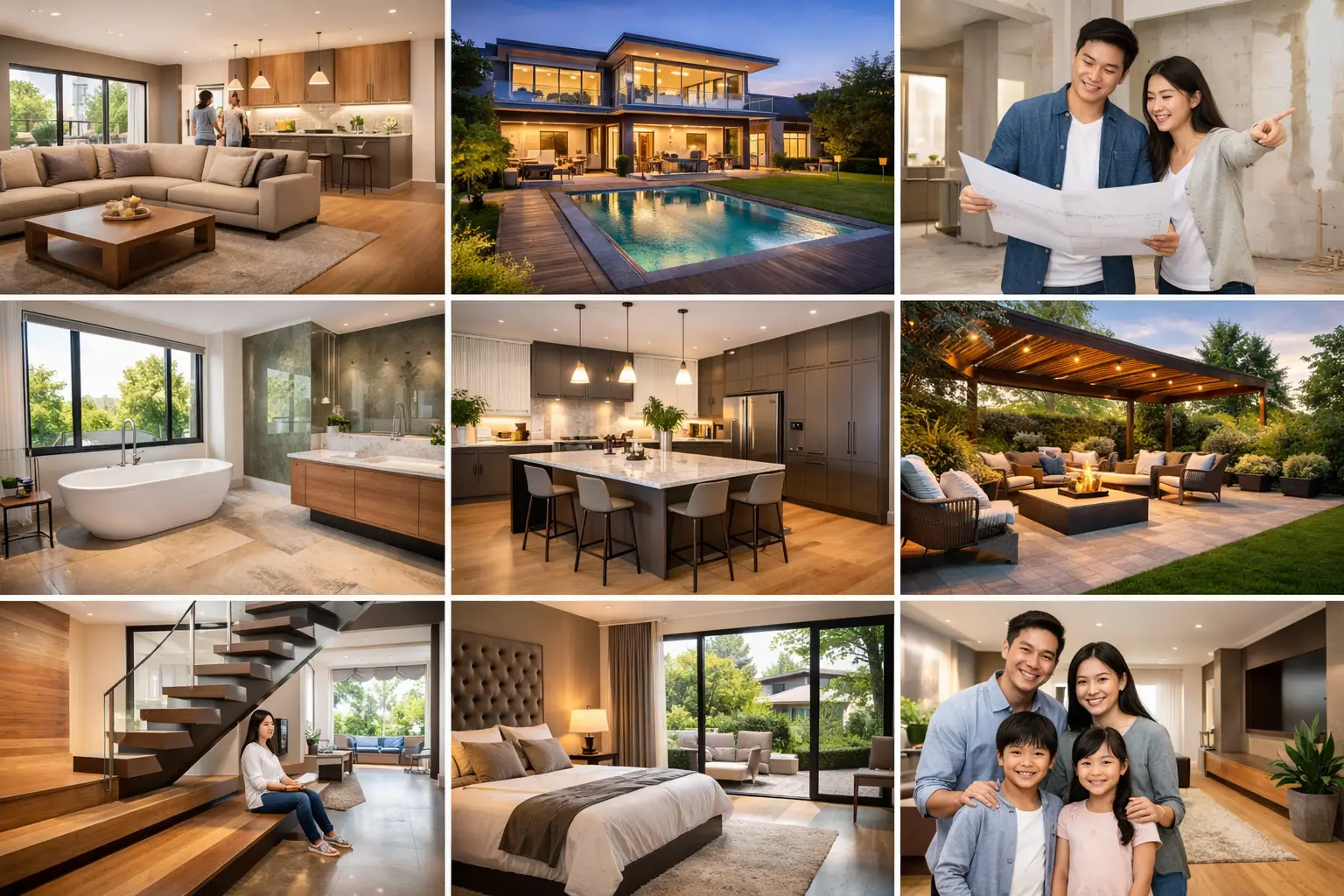
A landed house gives you something most homes never can – real spatial freedom. It also asks more of the design. When homeowners look for landed home renovation examples, they are rarely looking for surface-level inspiration alone. They want to see how different homes solve scale, circulation, natural light, privacy, storage, and the quiet question behind every major renovation: how should this house actually support the way we live?
That is what makes landed renovation so compelling. The best projects are not defined by size alone, but by how clearly the design responds to the architecture, the family, and the lifestyle inside it. Below are ten examples that reflect the range a landed home can take, along with the decisions that make each direction work.
Landed home renovation examples by style
1. Modern minimalist with architectural calm
This approach works especially well for homeowners who want the home to feel composed rather than decorated. Picture a landed interior defined by full-height paneling, concealed storage, pale stone surfaces, and a restrained palette of warm white, taupe, and soft gray. The visual effect is clean, but the success of the home depends on proportion, not emptiness.
In a larger house, minimalism can quickly become cold if every surface is flat and every room is under-furnished. The better version introduces texture through wood grain, limewash, fluted detailing, and layered lighting. A double-volume living space, for example, benefits from quiet drama – oversized pendants, slim-profile seating, and carefully framed sightlines instead of too many feature elements.
2. Modern luxury with softer contrast
Modern luxury remains one of the most requested directions for landed homes because the scale supports richer material expression. Marble-inspired surfaces, bronze accents, smoked glass, and tailored upholstery all feel more natural when there is enough room for them to breathe.
The strongest versions avoid overstatement. Rather than treating every room as a showpiece, they reserve visual weight for key zones such as the foyer, formal living room, or master suite. This creates hierarchy. A landed home does not need every wall to be dramatic. In fact, contrast is what gives the dramatic moments value.
3. Japandi for everyday ease
Japandi is often associated with apartments, but it translates beautifully to landed houses when the intent is warmth and clarity. Think oak-toned cabinetry, rounded edges, linen textures, low visual clutter, and a floor plan that feels easy to move through.
In a landed setting, this style benefits from natural light and a close relationship to outdoor space. Sliding doors that open to a patio, a dining area framed by garden views, or a quiet reading nook along a stair landing all reinforce the atmosphere. The trade-off is maintenance discipline. Japandi looks effortless, but only when storage is integrated well enough to keep daily life from spilling into every surface.
4. Wabi-sabi with tactile restraint
For homeowners who want something more soulful than polished, wabi-sabi offers a refined answer. This style leans into raw texture, muted earth tones, imperfect finishes, and handcrafted character. In a landed home, it often appears through plaster walls, travertine-inspired surfaces, dark timber, and furniture with a lower, grounded profile.
The risk is making the home feel unfinished rather than intentional. Good execution depends on material confidence. If the finishes are too inconsistent, the home can lose cohesion. If they are curated with care, the result feels deeply considered and quietly luxurious.
5. Contemporary family home with hidden practicality
Some of the most successful landed renovations do not announce a strong style at first glance. They simply feel right. These homes blend contemporary lines with highly practical planning: a larger dry kitchen for entertaining, an enclosed wet kitchen for heavy cooking, mudroom-style storage near the entrance, and custom millwork that keeps family routines organized.
This is often the smartest route for multigenerational households. Grandparents may need a bedroom on the first floor. Children may need study zones near common areas. Parents may want private spaces that still feel connected to the rest of the home. When the planning is done well, functionality becomes part of the aesthetic.
What these landed renovation examples show about layout
6. Opening the first floor for better flow
A common landed renovation move is to rework the first floor into a more open social zone. Older layouts often divide the living, dining, and kitchen areas too rigidly, which can make a spacious house feel fragmented. Removing selective walls, widening openings, or aligning sightlines can change the experience of the home immediately.
That said, fully open is not always better. Families who cook often may still prefer separation between entertaining and kitchen prep. The more nuanced approach is partial openness – glass partitions, wide portals, or joinery-led zoning that keeps spaces connected without eliminating function.
7. Reimagining the staircase as a design anchor
In many landed homes, the staircase is one of the first things you see, yet it is often treated as purely structural. A well-renovated home gives it more presence. Timber-clad treads, slim metal railings, curved forms, under-stair storage, or a sculptural pendant above the void can turn circulation into a defining feature.
This matters because stairs shape how the home feels vertically. In a multi-story house, transitions between levels should feel considered, not secondary. A staircase can add elegance, improve brightness, and help unify the language of the entire interior.
8. Turning upper floors into true private retreats
One of the privileges of landed living is the ability to create stronger zoning between public and private life. Upper floors can do more than hold bedrooms. They can become calm, tailored retreats with lounge corners, walk-in wardrobes, integrated vanity areas, or study spaces tucked into formerly unused circulation zones.
The best examples recognize that not every bedroom needs the same treatment. A child’s room may prioritize adaptability. A guest room may need simplicity and flexibility. A primary suite, by contrast, can support a more hotel-like experience with material continuity and layered lighting.
Landed home renovation examples that solve light and storage
9. Bringing in more daylight without sacrificing privacy
Landed homes often have more external exposure than apartments, but that does not guarantee good light. Some narrow or older properties suffer from dark internal zones, deep floor plates, or blocked side windows. Renovation can address this through skylights, enlarged openings, internal glass, lighter finishes, and better placement of reflective surfaces.
Privacy remains the balancing factor. Large windows are attractive, but street-facing exposure or neighboring houses can make them impractical. That is where design judgment matters. Screening details, layered curtains, and carefully positioned openings can preserve brightness while still protecting comfort.
10. Custom storage that respects the architecture
Storage in a landed house is less about quantity than consistency. Without a clear strategy, larger homes collect visual noise quickly. The most refined projects use bespoke millwork to integrate storage into wall paneling, window benches, bed platforms, and transitional spaces such as corridors or stair landings.
This is one area where tailored design makes a visible difference. Off-the-shelf furniture can work in selected rooms, but a whole-home storage plan creates order at scale. In a portfolio-driven practice such as Space Atelier, this kind of resolution is often what distinguishes a home that looks styled from one that feels fully designed.
How to read renovation examples the right way
When reviewing landed home renovation examples, it helps to look beyond the finish palette. Ask what problem the design is solving. Is the kitchen larger because the family entertains often? Is the living room calmer because the architecture already provides enough statement? Is the upper floor more enclosed because privacy matters more than openness in that household?
This is where homeowners can make better decisions early. A beautiful project is useful, but a relevant project is better. The right reference is not always the one that looks most impressive. It is the one that reflects your routines, your priorities, and the character of your house.
A landed renovation has the potential to do more than refresh a property. It can reshape how space supports family life, quiet moments, hosting, work, and rest. The most lasting examples are not trying to imitate someone else’s home. They are clear expressions of the people who live there, translated into space with confidence and care.
If you are collecting ideas, look for the example that feels less like a trend and more like a future you would actually want to come home to.
Do you have any enquiry?
Send us an enquiry! Let’s change ideas about what you want for your space.
CONTACT US