

Best Materials for Kitchen Countertops
Best Materials for Kitchen Countertops
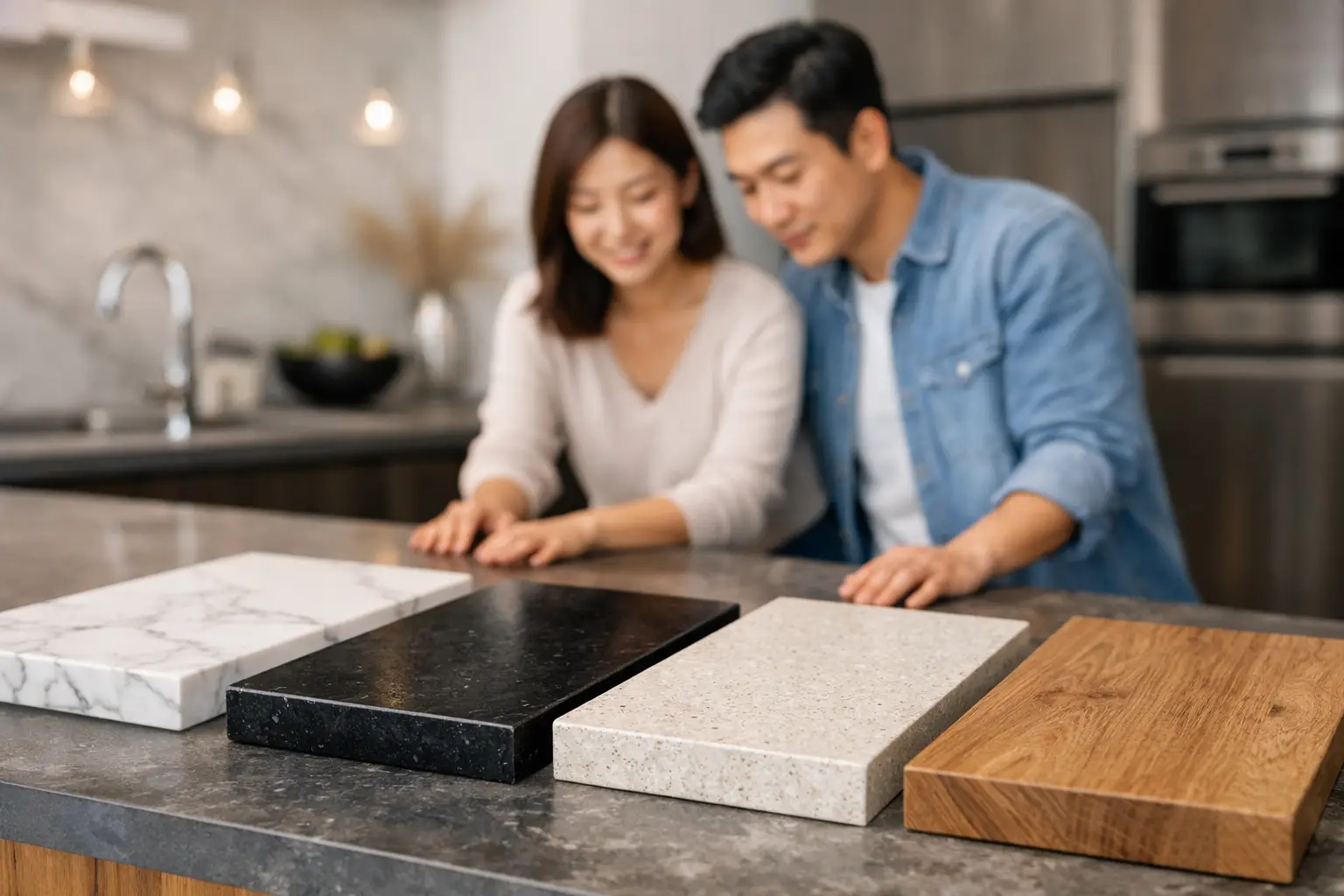
A kitchen countertop earns its keep fast. It holds hot pans in a rush, catches coffee spills before work, and doubles as a serving station when guests gather. That is why choosing the best materials for kitchen countertops is less about chasing a trend and more about matching your surface to the way you actually live.
In a tailored home, the countertop is not an isolated finish. It shapes how the kitchen feels, how light moves across the room, and how comfortably daily routines unfold. A sleek condo kitchen may call for crisp continuity and low visual noise, while a landed home with a generous island might benefit from stronger pattern and material presence. The right selection comes from balancing appearance, durability, maintenance, and budget with the overall design language of the space.
How to choose the best materials for kitchen countertops
The first question is not which material is most popular. It is how your kitchen will be used. A household that cooks heavily every day, with frequent chopping, heat, oils, and sauces, needs something different from a show kitchen used mainly for light prep and entertaining.
Layout matters too. In a compact apartment kitchen, reflective or quieter surfaces can help the room feel more open and composed. In a larger kitchen, the countertop often becomes a focal plane, especially on an island, so the material can carry more texture, veining, or depth. Cabinet finish, backsplash treatment, and flooring should all be considered together.
There is also the question of upkeep. Some homeowners are happy to maintain natural materials because they value patina and authenticity. Others want a surface that looks refined without asking for much attention. Neither approach is better. It simply depends on lifestyle.
Quartz: polished, practical, and widely versatile
Quartz remains one of the best materials for kitchen countertops for good reason. It offers a clean, elevated look with strong day-to-day durability, and it suits a wide range of interiors from modern minimalist to contemporary luxury.
Because quartz is engineered, it comes in a broad spectrum of looks. You can choose subtle solid tones, soft concrete-inspired finishes, or marble-like veining with more consistency than natural stone. That predictability is especially useful when a design scheme calls for control and cohesion.
In practical terms, quartz is non-porous, which means it resists staining better than many natural materials and does not require sealing. For busy households, that is a real advantage. It is generally easy to maintain and holds up well to daily use.
The trade-off is heat sensitivity. While quartz is durable, it is not the best surface for direct contact with very hot cookware. Trivets are still necessary. Some homeowners also find that lower-grade quartz can look overly uniform or artificial, so quality and slab selection matter.
Granite: natural character with dependable strength
Granite has long been valued for its durability and organic beauty. Each slab carries natural movement and variation, which gives a kitchen more depth and individuality. In homes where the kitchen needs warmth and visual richness, granite can be an excellent fit.
It performs well against scratches and heat, making it appealing for avid cooks. If your kitchen sees heavy use, granite offers a reassuring sense of toughness without sacrificing elegance. Darker granites can feel grounded and dramatic, while lighter options bring a softer, more classic expression.
That said, granite is porous and usually requires sealing to help protect against moisture and stains. Patterns also vary significantly from slab to slab. For some homeowners, that uniqueness is the appeal. For others, it makes coordination more demanding, especially when cabinetry and backsplash selections are still evolving.
Marble: refined and timeless, but high maintenance
Few materials create the same sense of quiet luxury as marble. Its soft veining and luminous surface have a timeless quality that works beautifully in both classic and contemporary kitchens. For statement islands or kitchens designed with a more editorial, design-forward point of view, marble is hard to ignore.
But marble asks for commitment. It is softer and more porous than granite or quartz, making it more vulnerable to etching, staining, and scratching. Acidic ingredients like lemon juice or vinegar can mark the surface. In a high-traffic family kitchen, those realities matter.
This does not mean marble is a poor choice. It means it is best for homeowners who appreciate natural evolution and are comfortable with a countertop that develops character over time. In the right project, that patina becomes part of the design story rather than a flaw.
Porcelain slabs: sleek performance with design flexibility
Porcelain has become increasingly compelling in contemporary kitchens, especially where a refined, architectural finish is desired. Large-format porcelain slabs can mimic natural stone, concrete, or even metal effects while offering strong resistance to heat, stains, and UV exposure.
For homeowners who want a crisp, modern look with less maintenance, porcelain deserves serious consideration. It is non-porous and generally easy to clean, making it suitable for both residential and some light commercial environments. It also supports a thinner, more streamlined profile if that suits the design direction.
The main consideration is fabrication and installation quality. Porcelain is strong but can be more brittle at edges if poorly handled. Not every installer has the same level of experience with large slabs, so execution is crucial. When detailed properly, though, it can look exceptionally sharp.
Solid surface: understated and easy to live with
Solid surface materials offer a smooth, seamless appearance that works well in minimalist or utility-driven kitchens. Integrated sinks are possible, which creates a clean visual line and simplifies cleaning around the basin area.
This material is often chosen for its practicality and softer, more uniform appearance. It is non-porous and repairable to a degree, since minor scratches can sometimes be sanded out. In kitchens where simplicity and consistency matter more than dramatic pattern, it can be a sensible option.
Its limitations are worth noting. Solid surface is generally less heat-resistant and less scratch-resistant than stone-based options. It can be a strong choice for moderate-use kitchens, but in homes with intense daily cooking, it may show wear sooner.
Butcher block and wood: warmth with a lived-in feel
Wood countertops bring warmth that stone and engineered surfaces cannot quite replicate. They soften hard finishes, add tactile richness, and suit styles such as Scandinavian, Japandi, rustic-modern, or relaxed contemporary interiors.
Used thoughtfully, wood can make a kitchen feel more welcoming and personal. It works particularly well as an accent surface on an island or breakfast area rather than throughout the entire kitchen.
Maintenance is the deciding factor. Wood requires regular care and is vulnerable to water damage, scratches, and staining if neglected. For homeowners who love natural texture and do not mind upkeep, it can be beautiful. For those wanting a more hands-off surface, it may feel demanding.
Laminate: budget-conscious, but more limited
Laminate has improved visually over the years, and it remains a practical choice for projects with tighter budgets. It comes in many patterns and colors, and it can help achieve a clean overall look without the cost of stone or porcelain.
Still, laminate is usually not positioned as a premium long-term solution. It is more susceptible to scratches, chips, and heat damage, and the edges and joints tend to reveal its limitations over time. In spaces where budget is the top priority, it can work. In kitchens designed for long-term value and elevated finish quality, other materials often perform better.
Matching countertop materials to different home styles
A modern minimalist kitchen often benefits from quartz or porcelain in quieter tones, where the emphasis is on calm surfaces and disciplined detailing. In a modern luxury setting, dramatic quartz, marble, or richly patterned granite can add visual presence without overwhelming the space.
For Japandi or Scandinavian interiors, softer whites, warm grays, and lightly textured surfaces pair well with wood cabinetry and muted palettes. Industrial kitchens can handle darker granite, concrete-look porcelain, or textured quartz with more edge and contrast.
This is where a tailored design approach makes the difference. The best countertop is not simply the most durable or the most expensive. It is the one that fits the architecture of the home, the habits of the household, and the mood the space is meant to hold. At Space Atelier, that alignment is what turns a material selection into a finished kitchen that feels intentional.
Which countertop material is best for most homeowners?
For most homeowners, quartz offers the strongest balance of appearance, durability, and low maintenance. It is versatile enough for many design styles and practical enough for everyday living. That combination makes it a reliable choice in condos, family homes, and renovation projects where ease matters.
But the best answer changes with priorities. If you want natural distinction and heat resistance, granite may be worth the upkeep. If you are after timeless beauty and are comfortable with wear, marble can be deeply rewarding. If your kitchen leans modern and performance-focused, porcelain is increasingly hard to overlook.
The smartest choice usually comes from seeing the countertop as part of a complete interior composition, not a standalone purchase. When material, layout, cabinetry, and lifestyle all align, the kitchen feels easier to use and more satisfying to live in. Choose the surface that supports that feeling every day.
Do you have any enquiry?
Send us an enquiry! Let’s change ideas about what you want for your space.
CONTACT US