

Which Interior Style Suits Small Apartments?
Which Interior Style Suits Small Apartments?
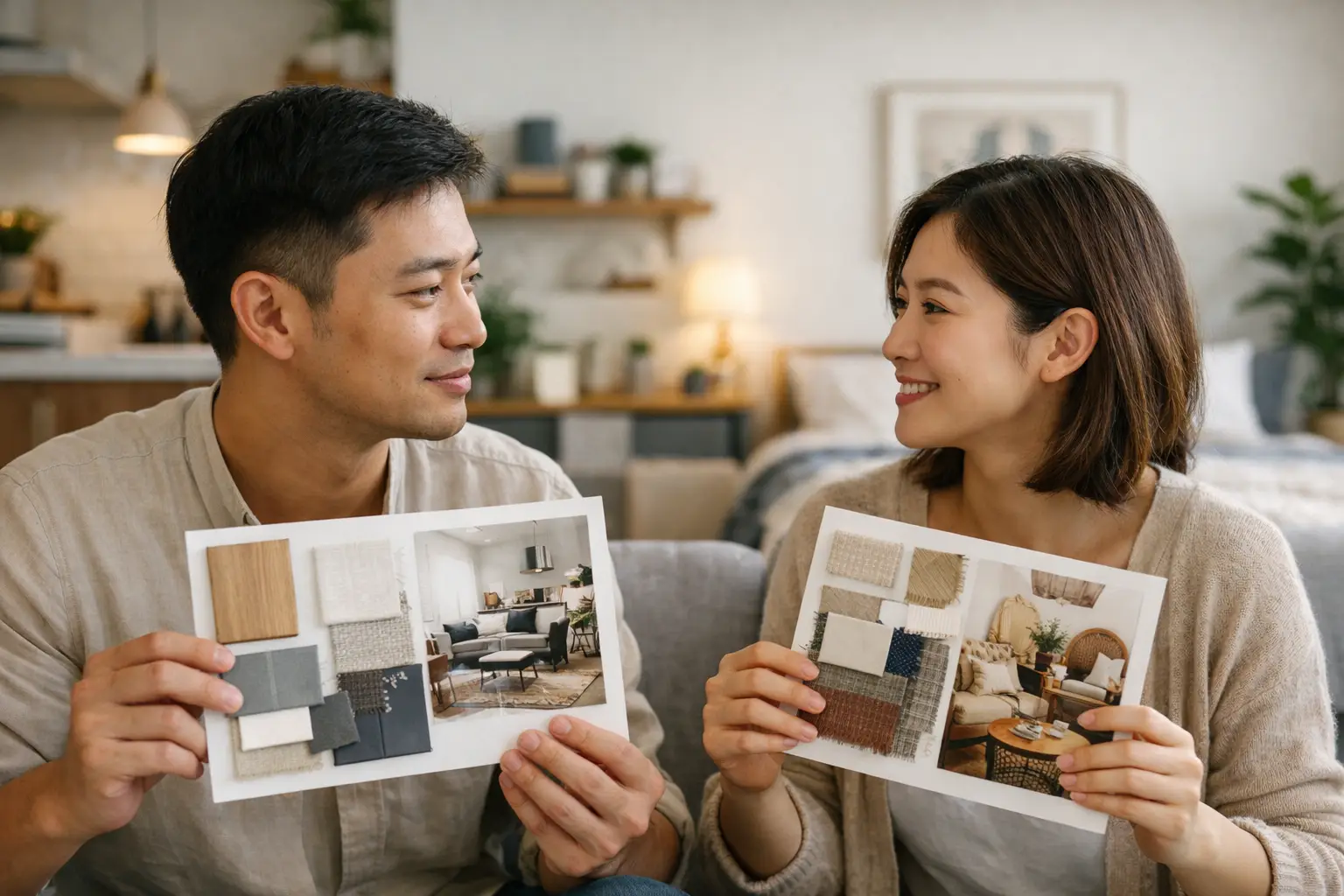
A small apartment tells the truth quickly. If the layout is clumsy, you feel it at the entry. If storage is unresolved, every surface starts working overtime. That is why homeowners often ask which interior style suits small apartments – not as a purely aesthetic question, but as a practical one. The right style does more than look good in photos. It shapes how spacious, calm, and functional a home feels every day.
For compact homes, style should never be chosen in isolation. A beautiful concept that ignores circulation, light, and storage can make a home feel tighter than it is. The strongest interiors are tailored to the unit itself – its footprint, ceiling height, natural light, and the way the homeowner actually lives.
Which interior style suits small apartments best?
The short answer is this: the best interior style for a small apartment is the one that creates visual clarity, supports efficient planning, and does not overburden the space with unnecessary detail. In practice, that usually points toward styles such as Modern Minimalist, Japandi, Modern Scandinavian, and certain expressions of Modern Contemporary.
That said, not every small home should look sparse. A compact apartment can still feel layered, warm, and distinctive. The key is restraint. Materials, tones, and furnishings need to work harder, because there is less room for visual noise and less tolerance for pieces that do not serve a purpose.
Why some styles work better in compact homes
Small apartments benefit from interiors that emphasize proportion, clean sightlines, and light flow. When cabinetry is visually heavy, when color contrasts are too abrupt, or when decorative elements compete with each other, the room can feel crowded even before it is physically full.
Styles that work well in smaller homes tend to share a few traits. They favor edited furniture silhouettes, integrated storage, and palettes that create cohesion across rooms. They also treat negative space as part of the design rather than as something to be filled.
This does not mean every compact apartment needs white walls and bare shelves. It means design decisions have to be disciplined. In a larger landed home, one oversized armchair or a bold accent wall may feel expressive. In a smaller apartment, the same move can dominate the entire room.
Modern Minimalist for clarity and control
Modern Minimalist remains one of the strongest answers to which interior style suits small apartments because it aligns naturally with the demands of limited square footage. Clean lines, concealed storage, and a tighter material palette help the home feel composed rather than compressed.
In living areas, this often translates into built-in carpentry that sits flush with the wall, low-profile seating, and a reduced number of statement elements. Instead of several decorative moments competing for attention, the room relies on proportion, texture, and finish quality.
The trade-off is that minimalist spaces can feel cold if they are not carefully balanced. This is especially true in apartments with limited daylight. The solution is not to abandon the style, but to soften it with warm wood tones, tactile fabrics, ambient lighting, and subtle tonal variation.
Japandi for warmth without clutter
Japandi has become especially relevant for apartment living because it combines Japanese restraint with Scandinavian comfort. It is calm, refined, and highly suited to homes where every piece needs intention.
A Japandi apartment typically uses muted neutrals, natural materials, and furniture with simple but elegant forms. The result is a space that feels grounded rather than empty. For homeowners who want serenity without the sharper edge of pure minimalism, this style often lands well.
It also adapts beautifully to open-plan living. A continuous palette across the kitchen, dining, and lounge area can make a compact apartment feel visually expanded. The caution here is to avoid turning Japandi into a collection of trendy objects. The style works best when it is built through disciplined planning, thoughtful joinery, and a quiet material story.
Modern Scandinavian for light and livability
If the apartment lacks natural light or has a tighter floor plate, Modern Scandinavian can be an effective direction. It is approachable, bright, and practical, which makes it especially attractive for young homeowners, first-time buyers, and growing families.
Scandinavian-inspired interiors tend to use pale woods, soft neutrals, and furniture that feels airy rather than bulky. This helps preserve openness. It also supports the kind of everyday comfort many homeowners want from a primary residence, especially in HDB flats, BTO units, and smaller condos.
The risk is that Scandinavian interiors can become generic if every decision leans too safe. What gives the style staying power is tailored detailing – better storage design, cleaner kitchen integration, stronger lighting composition, and selected contrast through black accents, stone textures, or deeper wood notes.
Modern Contemporary when you want more personality
Some homeowners want a compact home to feel polished and expressive, not just efficient. This is where Modern Contemporary can work well. It offers more freedom in form, materiality, and contrast while still maintaining visual order.
For smaller apartments, the style needs editing. A contemporary home with too many curved furniture pieces, dramatic finishes, or oversized lighting can quickly feel crowded. But when controlled well, it creates a stronger design identity than more neutral styles.
This approach is often suitable for urban condo living, where homeowners may want a more elevated atmosphere. Think integrated storage, refined stone-look surfaces, warm metallic accents, and furniture with sculptural lines used selectively rather than everywhere.
Can industrial or luxury styles work in a small apartment?
They can, but only in the right proportions.
Industrial interiors often feature darker tones, exposed textures, and stronger visual contrast. In a compact apartment, that can create depth and character, but it can also make the space feel heavier. The style tends to perform best when used as an influence rather than a full concept – perhaps through black-framed details, textured laminates, or controlled concrete-look finishes paired with cleaner cabinetry.
Modern Luxury can also work in smaller homes, especially when the goal is sophistication rather than excess. The common mistake is assuming luxury requires bulk. In reality, a small apartment can feel highly refined through material quality, elegant lighting, and precise detailing. Slim-profile cabinetry, warm stone textures, integrated mirrors, and tailored upholstery can deliver that effect without overwhelming the space.
Which interior style suits small apartments with real-life needs?
This is the more useful question, because style should follow lifestyle.
For homeowners who prioritize easy maintenance and visual calm, Modern Minimalist or Japandi often makes the most sense. For those who want a home that feels brighter and more family-friendly, Modern Scandinavian is usually a natural fit. If the brief calls for stronger personality or a more upscale urban character, Modern Contemporary may be the better direction.
The apartment itself also matters. A compact one-bedroom unit may benefit from a more restrained palette and fewer transitions. A resale flat with an awkward layout might need custom carpentry and style decisions that visually regularize the space. A small condo with full-height windows can carry darker finishes more confidently than a low-light unit.
This is where a portfolio-led design process matters. Good interior design is not about forcing a favorite style onto every home. It is about reading the conditions of the property and shaping a concept that feels natural within them.
The design moves that matter more than the label
Sometimes homeowners focus too much on naming the style and too little on the decisions that actually change how the apartment feels. In smaller homes, a few moves have disproportionate impact.
Continuous flooring across common areas can make the footprint read larger. Full-height storage can reduce surface clutter and sharpen the room envelope. Glass partitions, where appropriate, can preserve light while creating zones. A consistent palette from room to room helps the home feel cohesive rather than fragmented.
Furniture selection is just as important. A style may be right in theory, but if the sofa is oversized or the dining table interrupts circulation, the apartment will still feel unresolved. In compact homes, scale is part of style.
Lighting deserves the same attention. A small apartment rarely benefits from a single overhead fixture doing all the work. Layered lighting – ceiling lights, concealed strips, wall lighting, and warm task lamps – adds depth and can make even a modest room feel more considered.
A well-designed small apartment does not try to imitate a larger home. It embraces precision. It knows where to stay quiet, where to add texture, and where to invest in details that improve daily life.
That is usually the clearest answer to which interior style suits small apartments. Choose the style that supports the space, not the one that asks the space to work against itself. When proportion, storage, light, and lifestyle are all resolved together, even a compact home can feel expansive, elevated, and distinctly your own.
Do you have any enquiry?
Send us an enquiry! Let’s change ideas about what you want for your space.
CONTACT US