

12 Best Space Saving Furniture Ideas for Small Homes
12 Best Space Saving Furniture Ideas for Small Homes
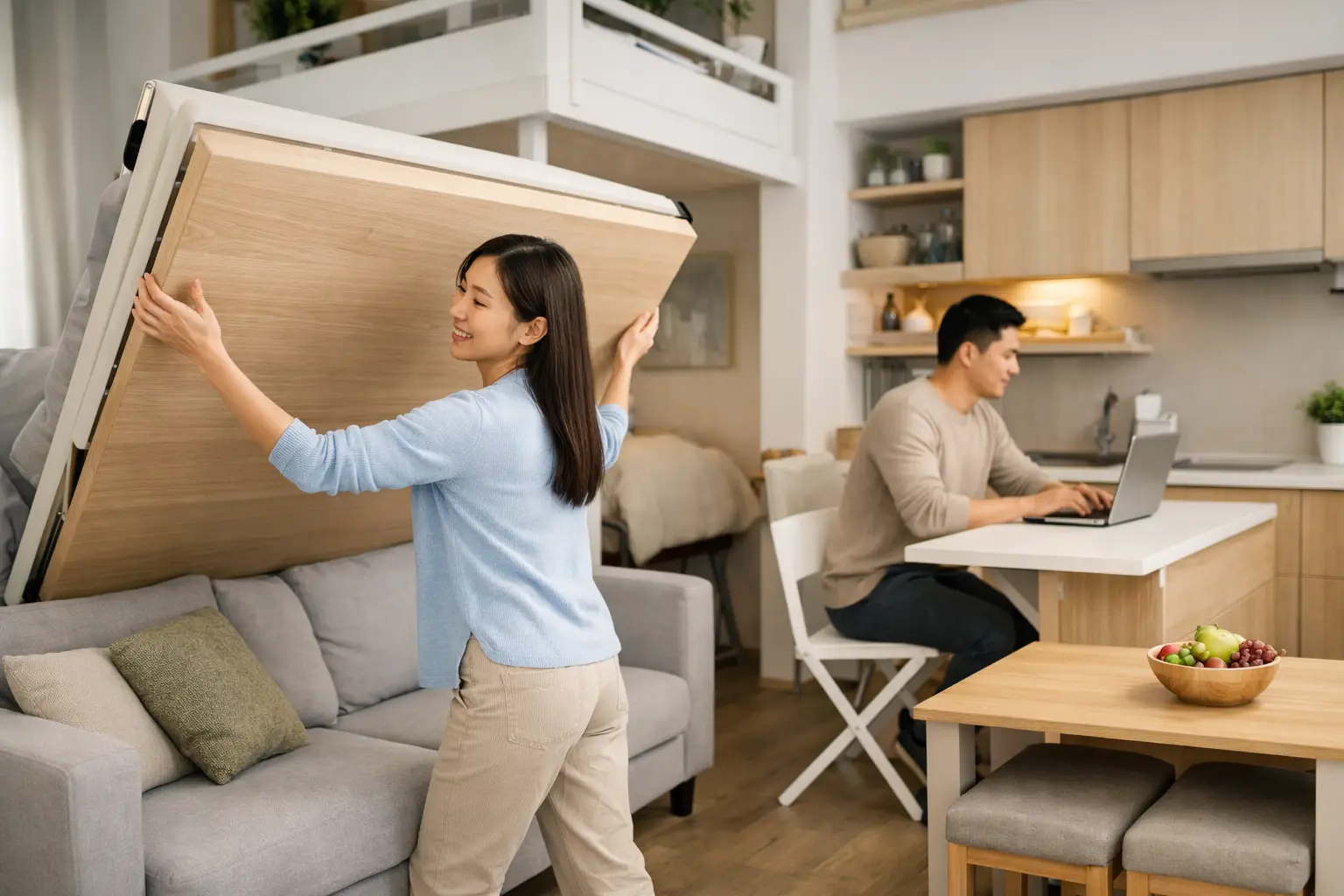
A compact home rarely feels small because of its square footage alone. It feels small when circulation is blocked, storage is exposed, and every room is asked to serve only one purpose. The best space saving furniture ideas address all three, bringing order to daily routines while preserving the sense of ease that makes a home personal.
For apartments, condos, and compact HDB or BTO homes, the goal is not to fill every blank wall with cabinetry. It is to create a considered composition where each piece earns its footprint, supports the way you live, and contributes to a calm, cohesive interior.
Start With How the Room Is Actually Used
Before selecting a sofa bed or ordering a storage bench, map out the room’s real demands. A living room may be a place for family movie nights, occasional guests, children’s homework, and quiet reading. A bedroom may need to accommodate work calls as well as rest. The right furniture solution responds to these patterns rather than to a generic floor plan.
Measure more than the walls. Account for door swings, window access, dining chairs pulled back from the table, and the clear path between rooms. A beautiful built-in that narrows a walkway or a coffee table that interrupts movement will make a home feel more constrained, not more efficient.
It also helps to distinguish between items used daily and those needed only occasionally. Daily-use functions deserve immediate access and a dedicated place. Guest bedding, seasonal decorations, and entertaining pieces can be stored higher, deeper, or within flexible furniture.
Best Space Saving Furniture Ideas That Work Harder
1. A platform bed with integrated storage
The area under a bed is one of the largest concealed storage opportunities in a home. A platform bed with drawers, lift-up storage, or a tailored base can hold luggage, linens, extra bedding, and off-season clothing without introducing another bulky cabinet.
Drawers are ideal when there is enough clearance beside the bed. In tighter bedrooms, a lift-up platform may be more practical because it opens from above. The trade-off is that lift-up storage is less convenient for items you reach for every week, so reserve it for belongings that can stay out of sight for longer periods.
2. A wall bed designed as part of the room
A wall bed is especially effective in a study, hobby room, or guest room that needs to remain useful every day. When closed, it can read as a refined panel wall, bookcase, or cabinet composition. When opened, it offers a proper sleeping surface rather than the compromise of an inflatable mattress.
This option works best when designed around the room from the outset. The opening clearance, mattress depth, bedside lighting, and nearby outlets all need to be resolved carefully. A wall bed is an investment, but it can turn one room into two without changing the home’s footprint.
3. A dining banquette with concealed compartments
A banquette makes sense in dining corners where individual chairs would create visual clutter or require too much space to pull out. It can be tailored to follow a wall, wrap around a corner, or sit beneath a window, turning an overlooked edge into comfortable seating.
Storage beneath the seat is valuable, but comfort should not be sacrificed for capacity. A properly angled backrest, quality cushioning, and a table sized for easy entry matter as much as the hidden compartment. Pairing the banquette with movable chairs on the open side keeps the setting flexible for larger gatherings.
4. A drop-leaf or extendable dining table
Not every home needs a large dining table at all times. A drop-leaf table can sit neatly against a wall for weekday meals and open up when friends visit. An extendable table offers a more permanent, formal presence while still adapting to different occasions.
Choose based on how often you entertain. If hosting is occasional, a compact table with leaves may be the more sensible choice. If dining is central to family life, prioritize a stable, generous surface and save space elsewhere. A table that is too small for everyday use simply creates another frustration to manage.
5. A storage ottoman instead of a conventional coffee table
In a compact living area, a storage ottoman can serve as a coffee table, extra seat, footrest, and discreet home for throws, games, or children’s items. Upholstered versions soften a room with hard flooring and sharp cabinetry, while a removable tray creates a stable surface for drinks.
The main consideration is proportion. An oversized ottoman can overwhelm a narrow seating zone, while one that is too small will feel disconnected from the sofa. Aim for enough clearance around it to move comfortably, particularly in an open-plan living and dining space.
6. A slim console that becomes a work surface
A shallow console behind a sofa or along an entry wall can provide a landing place for keys, charging devices, and mail without consuming valuable floor area. In the right configuration, it can double as a compact desk for light laptop work.
This is not a replacement for a dedicated workstation if you spend full days working from home. For occasional use, however, a carefully designed console with concealed cable management and a comfortable stool can keep the living room composed when the workday ends.
7. A modular sofa with purposeful flexibility
A modular sofa can be rearranged for lounging, entertaining, or accommodating overnight guests. Pieces with hidden storage or a movable chaise offer additional functionality, particularly in multipurpose family rooms.
Flexibility should not be confused with excess. Too many movable pieces can make a room feel unsettled. Select a configuration that suits the room’s primary layout, then introduce only the elements that genuinely improve its use. A low-profile silhouette and raised legs can also preserve sightlines, helping the room feel more open.
8. Floor-to-ceiling cabinetry with a curated center
Tall cabinetry uses vertical space efficiently, especially in entryways, bedrooms, and living rooms. The most successful designs avoid a heavy wall-of-storage effect by balancing closed compartments with a recessed display niche, open shelf, or integrated desk.
A curated center gives the eye a place to rest. It may frame artwork, books, ceramics, or a small collection of objects with personal meaning. This approach allows practical storage to feel intentional and architectural rather than purely utilitarian.
9. Nesting tables for adaptable surfaces
Nesting tables are useful when extra surfaces are needed only at certain moments. They can separate for entertaining and tuck together when the room needs to feel more spacious. Their visual lightness suits contemporary, Scandinavian, and Japandi-inspired interiors particularly well.
Look for tables with a consistent material language that relates to the rest of the room. Mixed finishes can work, but too many competing metals, woods, and stone effects may make a small space feel busy.
10. A window seat with drawers or lift-up storage
A window seat can transform an underused bay, bedroom window, or corridor end into a place to read, pause, or enjoy the view. Built-in drawers beneath the seat keep the storage accessible, while a lift-up base offers deeper capacity for less frequently used items.
Because it is integrated into the architecture, a window seat can make a room feel more generous without adding freestanding furniture. Add tailored cushions in a durable fabric, and it becomes a quiet feature that supports both comfort and storage.
11. A full-height entry cabinet with a bench niche
Shoes, bags, umbrellas, and delivery parcels can quickly overwhelm a small entry. A full-height cabinet with a bench niche gives these essentials a controlled home while creating a natural moment to sit down and put on shoes.
Ventilation and internal organization are essential for shoe storage. Adjustable shelves accommodate different footwear, while a tray or easy-clean base helps manage everyday dirt. A mirror or softly lit niche can bring warmth to what is often a purely functional zone.
12. A concealed study within a cabinet wall
For homes without a separate office, a cabinet-front study can keep work visually contained. Doors close over shelves, equipment, and documents, allowing the room to return to its residential character after hours.
This idea is most effective when the desk depth is sufficient and lighting is planned early. A beautiful hidden workspace that is uncomfortable to use will not stay organized for long. Prioritize ergonomics, then refine the finishes so it belongs naturally within the room.
Choose Tailored Pieces When the Layout Is Irregular
Freestanding furniture is often faster to purchase and easier to move, making it a sensible choice for renters or homeowners who expect to relocate. It also adds softness and flexibility to a room that might otherwise feel overly fitted.
Tailored furniture becomes more valuable when a layout has awkward corners, structural columns, bay windows, or limited wall space. A custom media wall can conceal cables and storage around a projection, for example, while a fitted wardrobe can use every viable inch of a narrow bedroom. The strongest interiors often combine both: architectural storage where precision matters and movable pieces where life benefits from change.
Keep the Design Visually Quiet
Space-saving furniture succeeds when it reduces visual noise as well as physical clutter. Maintain a restrained palette across major built-ins, walls, and large upholstery pieces. Repeating one or two finishes – such as warm oak, soft matte laminate, or pale stone – creates continuity and lets the room read as one considered environment.
Open shelving should be treated as display space, not overflow storage. Closed cabinetry is usually the better choice for everyday necessities, while a few open niches can showcase objects that add character. Integrated lighting within those niches can provide depth in the evening without requiring more floor lamps.
The most rewarding compact homes do not try to prove how much they can contain. They make room for the rituals that matter, then allow everything else to settle quietly into place.
Do you have any enquiry?
Send us an enquiry! Let’s change ideas about what you want for your space.
CONTACT US