

How to Create a Wabi Sabi Bedroom That Feels Calm
How to Create a Wabi Sabi Bedroom That Feels Calm
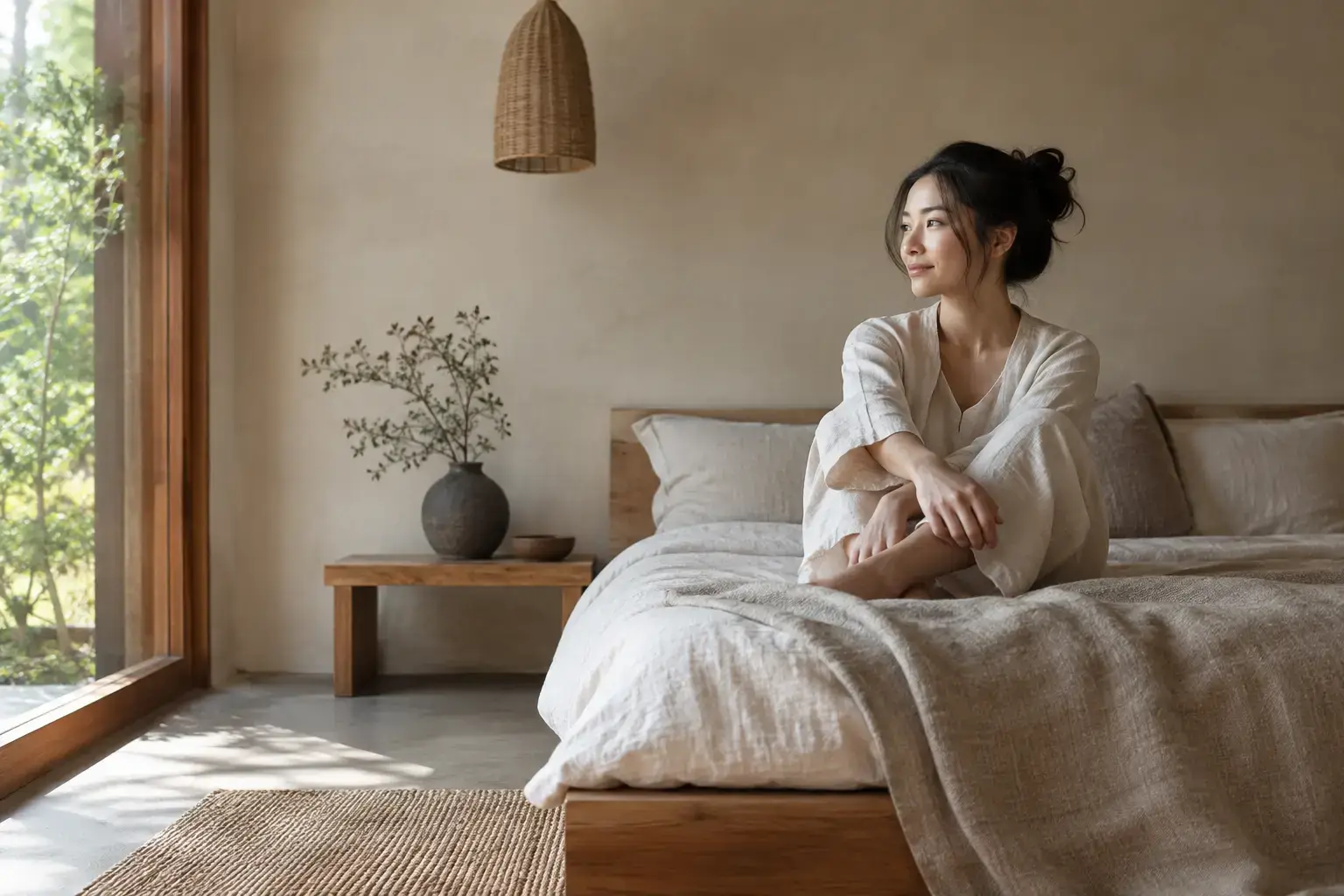
A bedroom should not feel like a showroom after the bed is made. It should feel softer with use: linen creased by sleep, timber warmed by daylight, and a favorite ceramic cup resting imperfectly on the nightstand. For homeowners asking how to create a wabi sabi bedroom, that is the essential shift – designing for a lived-in sense of calm rather than a perfectly styled image.
Wabi-sabi is often mistaken for minimalism with more beige. While both can be restrained, wabi-sabi has a different emotional center. It finds beauty in natural variation, quiet age, honest materials, and the gentle irregularity of handmade objects. The result is a bedroom that feels grounded, personal, and deeply restorative.
Start With a Quiet, Material-Led Palette
A successful wabi-sabi bedroom begins with undertones, not a strict color formula. Choose hues that appear naturally weathered: warm white, oat, putty, mushroom, clay, faded olive, charcoal, and soft brown. These colors create depth without demanding attention, particularly when they are layered across walls, upholstery, window treatments, and bedding.
Avoid treating neutral as synonymous with flat. A cool gray wall beside cream bedding can feel sterile, while a warm plaster-toned wall paired with sand-colored linen feels composed and inviting. In compact bedrooms, including many HDB and BTO layouts, a light warm base can also preserve visual openness without sacrificing character.
Texture does much of the work. Consider limewash or mineral-effect paint for subtle movement on the walls, oak or ash wood for furniture, woven wool underfoot, and washed linen for the bed. These finishes should not match exactly. Slight tonal differences make the space feel collected over time rather than purchased as a set.
Choose Imperfect Materials With Intention
Wabi-sabi is not an excuse for poor finishing or neglected maintenance. There is a meaningful difference between a hand-finished wood grain and a damaged laminate edge, or between a naturally pitted ceramic vase and a cluttered shelf. Every element still needs to be selected and placed with care.
Look for materials that gain character through use. Solid or wood-veneered joinery, stone with visible veining, brushed metal, rattan, linen, cotton, and handmade ceramic all bring an understated tactile quality. Their appeal lies in their variation: no two stone cuts, wood grains, or hand-thrown vessels are exactly alike.
For built-in carpentry, restraint is particularly effective. A low-profile wardrobe in warm oak, taupe, or a textured matte finish can blend into the room instead of becoming its dominant feature. Handleless doors or discreet integrated pulls maintain the calm profile, while open niches can offer a home for one or two considered objects. The trade-off is that open storage requires editing. If daily life calls for more concealed storage, prioritize closed cabinetry and allow texture to come through in softer furnishings instead.
Let the bed be the room’s softest element
The bed is the visual and emotional anchor of a wabi-sabi bedroom. Rather than tightly tailored bedding, choose layers that invite touch: a linen duvet cover, cotton sheets, a lightweight quilt, and perhaps one textured throw. The arrangement can be relaxed, but it should not look accidental. Aim for generous layering and gentle folds rather than an overfilled pile of decorative pillows.
An upholstered headboard in oatmeal bouclé or washed linen introduces softness, while a timber headboard brings a more architectural expression. Both work well. The choice depends on the rest of the room: use upholstery when the space has hard flooring and clean-lined cabinetry; use wood when the bedroom needs warmth and structure.
How to Create a Wabi Sabi Bedroom Through Light
Harsh overhead lighting can undo even the most carefully curated room. Wabi-sabi interiors respond best to layered illumination that changes naturally from morning to evening. Begin with daylight. Sheer curtains in linen-look fabric diffuse strong sun while retaining a sense of airiness. Add blackout drapery when sleep quality and privacy are priorities.
At night, favor warm lighting around 2700K. Bedside wall sconces, pendant lights, or table lamps create softer pools of light than a single ceiling fixture. A paper, fabric, ceramic, or frosted-glass shade will add warmth and reduce glare. Dimmers are worthwhile if the renovation scope allows, particularly in a primary bedroom used for reading, winding down, and dressing.
The fixture itself should feel quiet rather than decorative for its own sake. A sculptural ceramic lamp can be a focal point, but it should earn that role through texture and form, not through shine or scale. When a room is small, wall-mounted lights free up nightstand surface area and make the composition feel less crowded.
Edit the Room Until It Can Breathe
Wabi-sabi is spaciousness, not emptiness. Leave enough visual pause around furniture, on bedside surfaces, and along the floor so materials can be appreciated. This is especially valuable in bedrooms where wardrobes, desks, and beds must coexist.
Start by identifying what supports rest and what merely occupies space. A bedside table, reading lamp, laundry solution, and a small tray for essentials may be necessary. Three competing display objects, excess cushions, and visible cables rarely are. Conceal practical items through thoughtful joinery, then let a small number of meaningful pieces remain visible.
A restrained vignette might include a low ceramic vessel with a single branch, a stack of two books, and a textured tray. The branch does not need to be perfect. A dried stem, seed pod, or seasonal foliage has more presence than a large arrangement designed to fill every corner.
Make room for objects with a story
A wabi-sabi bedroom becomes convincing when it reflects its owner. This may be a vintage stool beside the bed, a framed charcoal sketch, a woven basket from a meaningful trip, or a ceramic piece made by a local artisan. These objects introduce history and irregularity that cannot be replicated through mass-produced decor alone.
The key is curation. One timeworn stool can feel intentional; several unrelated flea-market finds may pull the bedroom toward rustic or eclectic. If you prefer a more contemporary home, combine a few soulful pieces with streamlined cabinetry and a restrained palette. Wabi-sabi can sit comfortably within modern minimal, Japandi, or contemporary interiors when the material story remains coherent.
Plan for Comfort, Not Just the Photograph
Before committing to finishes, consider how the bedroom is used on an ordinary weekday. A beautiful low platform bed may suit some households, but it can be less practical for those with mobility concerns. Open shelving looks serene in a styled image, yet may not serve a busy family that needs easy, concealed organization. Natural fabrics are appealing, though linen’s wrinkles are part of its character and may not suit someone who wants a crisp hotel-bed appearance.
This is where tailored planning matters. In a resale apartment, existing floor tones or window proportions may guide the palette. In a new BTO home, custom storage can be designed from the outset to preserve clear sightlines. For a larger landed home, a reading corner with a sculptural lounge chair may be possible; in a compact condo bedroom, the same feeling may come from a single well-proportioned lamp and tactile bedding.
The goal is not to imitate a reference image. It is to create a room whose materials, proportions, and storage support the way you rest. A considered design process can turn these quiet choices into a bedroom that feels resolved from every angle.
Let the room age gracefully. Choose the linen that softens after washing, the wood that reveals its grain in afternoon light, and the objects you would still keep even if no one else saw them. That is where a wabi-sabi bedroom begins to feel like home.
Do you have any enquiry?
Send us an enquiry! Let’s exchange ideas about what you want for your space.
CONTACT US