

10 HDB Resale Renovation Ideas That Work
10 HDB Resale Renovation Ideas That Work
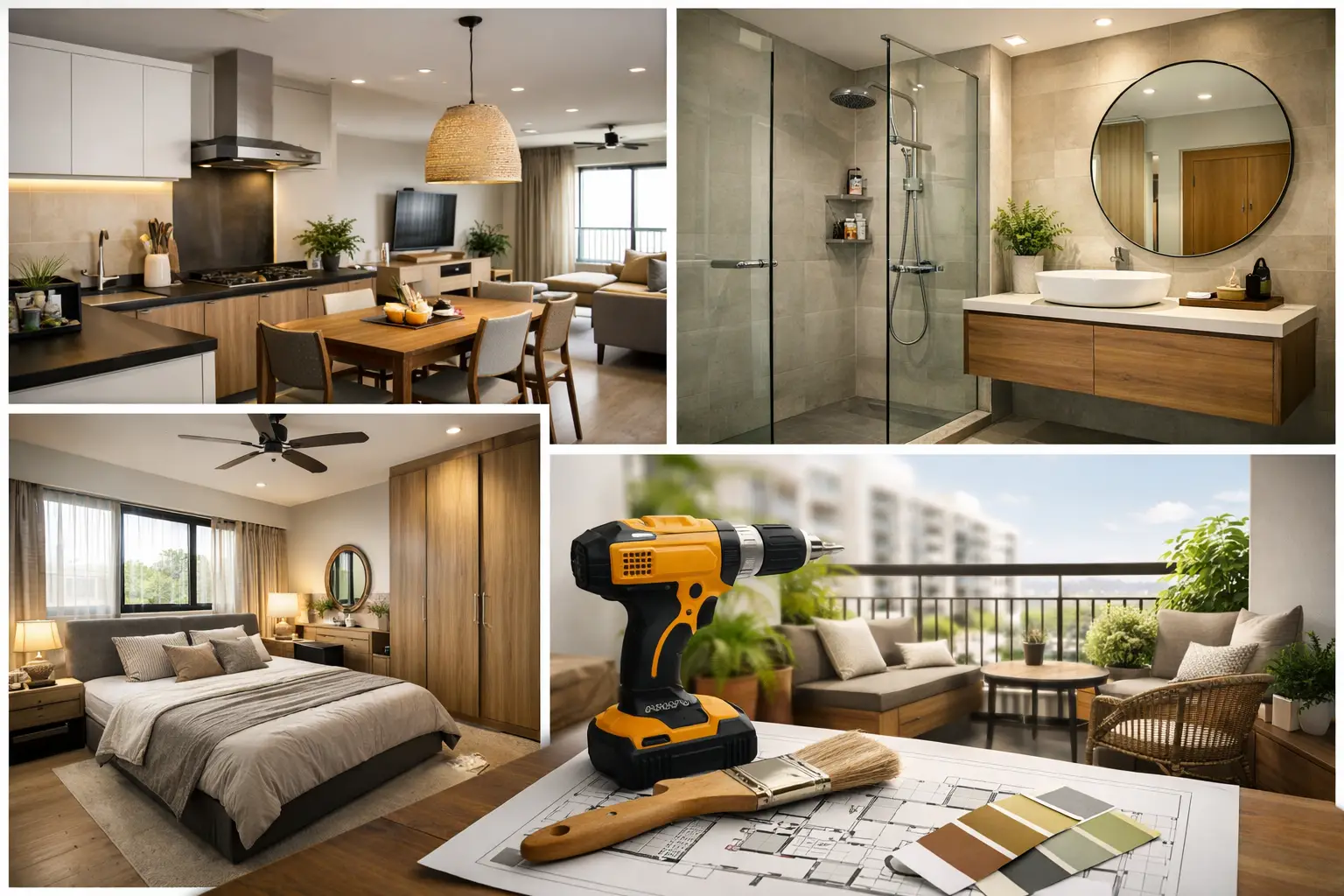
Older resale flats rarely need more decoration. They need better decisions.
That is what makes strong hdb resale renovation ideas different from trend-driven inspiration. In a resale HDB, you are not starting with a blank shell. You are working with inherited layouts, aging finishes, structural limits, and the everyday realities of family life. The most successful homes do not simply look newer. They feel calmer, work harder, and reflect the people living in them.
What good HDB resale renovation ideas should solve first
A resale flat usually reveals its priorities within minutes. Some feel dark because walls interrupt natural light. Some feel cramped because storage has been added without a clear plan. Others have generous square footage but still feel inefficient because circulation is awkward and every room is doing too little or too much.
This is why renovation ideas should begin with spatial intent, not surface finishes. Before choosing fluted panels, limewash textures, or a walnut veneer, it helps to ask simpler questions. Where does clutter collect? Which spaces feel underused? Does the dining area support daily meals or only special occasions? Is the kitchen isolated when the household prefers connected living?
Design-led renovation is less about adding features and more about removing friction. In older HDB homes, that often means editing the layout, improving light flow, and introducing storage that feels integrated rather than imposed.
1. Open the common zones, but keep definition
One of the most practical hdb resale renovation ideas is to reconsider the living, dining, and kitchen relationship. Many older flats have enclosed kitchens and compartmentalized common areas. Opening these spaces can make the home feel significantly larger, but full openness is not always the best answer.
A partial opening often performs better than a complete one. Glass partitions, slim framed sliding panels, or half-height dividers can preserve brightness while still controlling cooking odors, noise, and visual mess. For households that cook frequently, this balance matters.
The design opportunity here is subtle zoning. A change in ceiling treatment, flooring inlay, or cabinetry finish can define each area without making the home feel broken up. The result feels considered rather than aggressively open-plan.
2. Turn awkward corners into built-in storage
Resale flats tend to come with leftover spaces – recesses near the entry, odd corners along corridors, or shallow walls that seem too narrow to use properly. These are often where clutter quietly accumulates.
Custom millwork transforms these in-between areas into part of the architecture. An entry bench with concealed storage, a full-height cabinet that wraps around a structural edge, or a dining banquette with drawers can make a flat feel far more tailored. Built-ins also create visual calm because they reduce the need for standalone furniture.
The trade-off is cost. Custom carpentry is usually more expensive than buying ready-made pieces. But where square footage is limited, the return is often worth it because every inch is working harder.
3. Use one consistent material palette across the home
Older flats can feel visually fragmented, especially after years of patchwork updates. One room may have glossy tile, another may have laminate flooring, and a third may carry a completely different color story. A restrained palette immediately makes the home feel more cohesive.
That does not mean everything should look flat or identical. It means the finishes should relate to one another. Warm wood tones, soft stone-look surfaces, muted neutrals, and black or bronze detailing tend to create a grounded contemporary look that suits resale homes well. Japandi, modern minimalist, and modern contemporary directions all benefit from this discipline.
Consistency also improves perceived spaciousness. When flooring flows uninterrupted and cabinetry tones are repeated thoughtfully, the eye reads the home as larger and more composed.
4. Let lighting correct what the layout cannot
Many resale HDB units have limitations that cannot be fully redesigned. Structural walls stay where they are. Window positions are fixed. Ceiling heights may not feel generous. Good lighting becomes one of the most effective tools in the renovation.
Layered lighting works better than relying on one bright ceiling fixture per room. Cove lighting can soften the mood in living spaces, task lighting sharpens kitchen function, and wall washers or concealed LED strips can highlight texture without visual clutter. In bedrooms, bedside pendants or integrated headboard lighting free up table space and create a more refined look.
The key is restraint. Too many lighting types can make a home feel overdesigned. The goal is quiet atmosphere with practical clarity.
5. Rethink the kitchen as a daily-use workspace
In many resale flats, the kitchen is where age shows most clearly. Outdated cabinets, inefficient counters, and poor ventilation all affect daily comfort. Renovating this space has a strong visual and functional impact.
A galley layout can be highly efficient when storage and appliance placement are planned carefully. In larger flats, adding a peninsula may improve prep space and create a more social connection to the dining area. In more compact homes, tall pantry units and integrated appliances can keep the kitchen streamlined without making it feel heavy.
Material choices matter here. Compact laminate, sintered stone, and porcelain surfaces each offer different advantages in durability, cost, and finish. The best option depends on how intensively the kitchen is used and how much maintenance the household is comfortable with.
6. Make the bathroom feel larger without enlarging it
Bathrooms in older HDB flats are often tight, visually busy, and difficult to maintain. A smart redesign can change the entire experience of the home.
Large-format tiles reduce grout lines and create a cleaner visual field. Wall-hung vanities expose more floor area, which helps the room feel lighter. Recessed niches keep shower products contained without adding racks or clutter. If the layout allows, a fixed glass panel instead of a full shower enclosure can make the room feel more open.
This is also where details matter. A stone-look tile paired with matte fixtures and warm lighting can shift the bathroom from purely utilitarian to quietly hotel-like, without becoming impractical.
7. Design the master bedroom as a retreat, not just a sleeping space
Resale renovations often prioritize common areas first, but the master bedroom deserves equal attention. A well-designed bedroom creates visual rest, not just storage.
Instead of filling the room with separate pieces, consider an integrated composition – wardrobe, headboard wall, bedside shelving, and vanity planned as one language. This produces a cleaner silhouette and improves circulation. Soft upholstery, timber textures, and concealed lighting can add depth without making the room feel busy.
For smaller bedrooms, mirrored wardrobe panels or lighter finishes can help. For larger rooms, a study corner or lounge seat may be more valuable than simply increasing wardrobe volume. It depends on how the room is actually used.
8. Create a flexible room that can evolve
One of the smartest resale strategies is to avoid overcommitting every room to a single function. A study may later need to become a nursery. A guest room may need to support hybrid work. A hobby room may eventually serve an aging parent.
This is where flexible planning becomes more valuable than decorative impact. Sliding doors, fold-down desks, modular storage, and concealed beds can help a room adapt over time. Even when the space remains visually minimal, it can still support changing needs.
Homes that age well are rarely the ones built around a fixed moment. They are the ones designed with future shifts in mind.
9. Respect the character of the flat while modernizing it
Not every older detail should be erased. Some resale HDB homes carry proportions, windows, or spatial qualities that newer units do not always offer. Good renovation preserves what still works and updates what no longer does.
That could mean retaining a generous living area and making it more refined through built-in storage and cleaner finishes. It could mean restoring terrazzo-inspired tones in a contemporary way, or introducing a wabi-sabi palette that softens the age of the flat rather than fighting it.
This approach often produces more character than a renovation that tries too hard to imitate a new-build condo. Design feels more convincing when it responds to the home itself.
10. Renovate around lifestyle, not resale myths
Many homeowners hear the same advice repeatedly – keep everything neutral, do not customize too much, avoid bold decisions for future resale value. There is some logic to this, but it can be overstated.
A well-designed home should first support the people living in it now. If a household needs a larger kitchen, better wardrobe planning, or a calm material palette that reduces visual noise, those choices are not indulgent. They are good design. The market generally responds well to homes that feel coherent, well-maintained, and thoughtfully planned.
The more useful question is whether a decision improves livability without creating unnecessary complications. A custom reading nook may be highly personal but still broadly appealing. An overly specific built-in for a niche hobby may not be.
Bringing the best ideas together
The strongest resale renovations are rarely built on one statement feature. They come from a series of measured choices that support one another – better flow, calmer materials, tailored storage, improved light, and rooms that suit the rhythm of daily life.
For homeowners who want more than cosmetic change, this is where a tailored design approach matters. Space Atelier often frames renovation through the philosophy of home, and that perspective fits resale living especially well. Older flats ask for more than style selection. They ask for clarity, editing, and design that responds to real spatial conditions.
If you are planning your own renovation, start by looking past inspiration boards and toward how the home should feel at 7 a.m., on a busy weeknight, or when guests arrive unannounced. The right idea is usually the one that makes everyday living feel beautifully easy.
Do you have any enquiry?
Send us an enquiry! Let’s change ideas about what you want for your space.
CONTACT US