

Best Materials for Landed Homes That Last
Best Materials for Landed Homes That Last
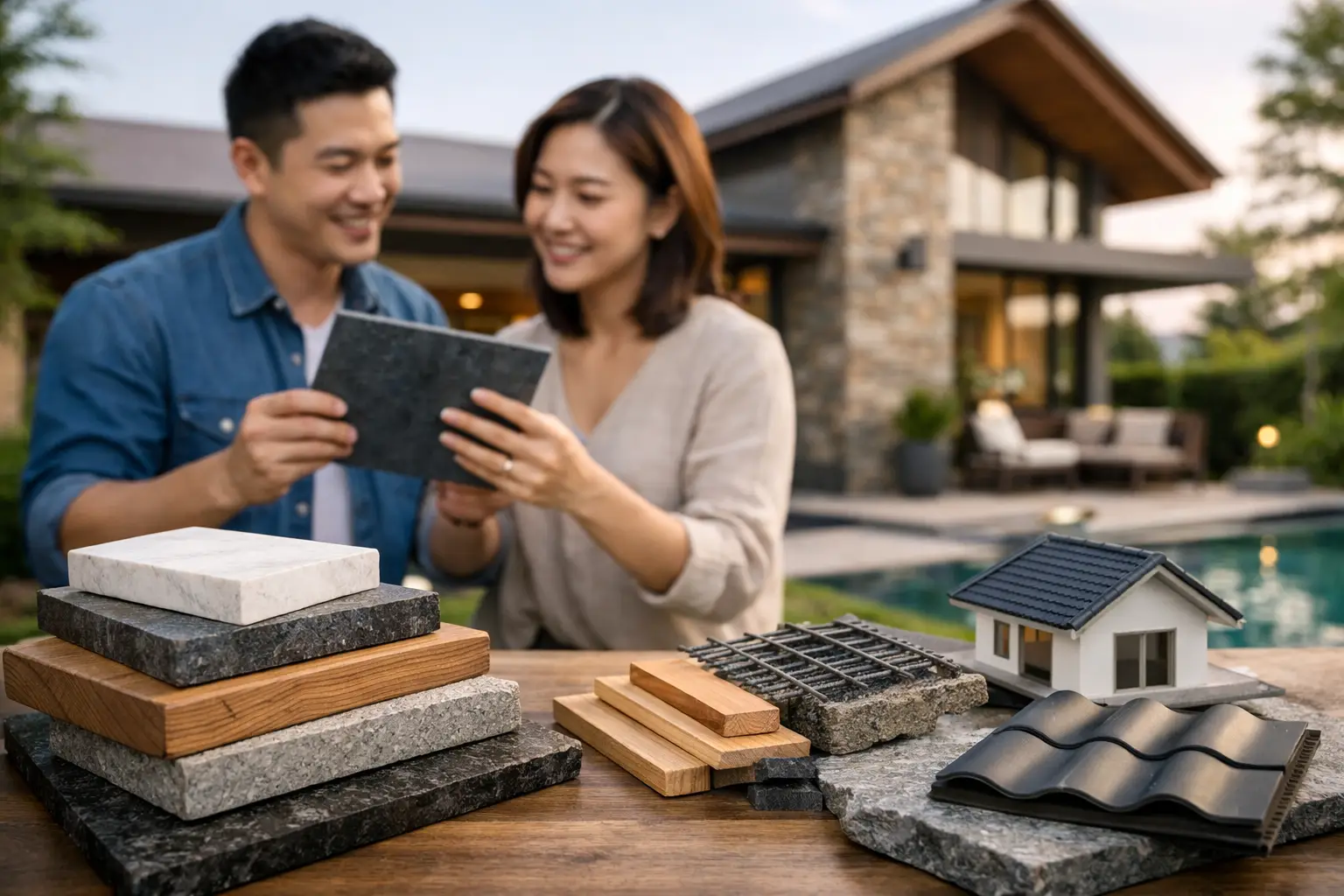
A landed home gives materials more room to make an impression – and more conditions to withstand. Double-volume spaces, staircases, outdoor thresholds, larger window spans, and multiple floors place real demands on every surface. The best materials for landed homes are not simply the most luxurious options. They are the materials that suit the architecture, support daily life, and continue to look composed through years of sun, humidity, movement, and maintenance.
For homeowners in Singapore, this decision is especially consequential. A material that feels refined in a showroom may react very differently to moisture, intense daylight, or the wear created by a busy multigenerational household. A considered material palette brings the home together while allowing each area to perform as it should.
Start with the way the home is lived in
Material selection should begin before a style board is finalized. Consider how the household moves through the home: whether shoes are removed at the entry, whether pets and children use the garden, how often the kitchen is used, and which rooms receive strong afternoon sun. These practical details shape choices as much as an affinity for Modern Luxury, Japandi, or Wabi-Sabi interiors.
A large house does not need one material repeated everywhere. In fact, thoughtful variation can give each zone its own character. The entry may call for a hardwearing stone-look surface, while bedrooms benefit from the warmth and softness of timber. The key is visual continuity. Repeating an undertone, grain direction, metal finish, or grout color can make distinct materials feel part of one tailored composition.
Flooring materials that balance presence and performance
Flooring establishes the visual foundation of a landed interior. It also receives the most direct wear, particularly in entryways, kitchens, family areas, and connections to patios or gardens.
Porcelain tile for high-traffic and wet areas
Large-format porcelain is one of the most reliable choices for communal spaces, kitchens, bathrooms, and covered outdoor areas. It is dense, moisture-resistant, easy to clean, and available in convincing stone, concrete, and timber finishes. A matte or lightly textured finish is generally more forgiving than polished tile, which can show water marks and become slippery when wet.
Porcelain can create the calm, expansive effect often associated with contemporary interiors, especially when grout lines are minimized. Still, it can feel cool underfoot and acoustically hard in a large open-plan room. Area rugs, upholstered furnishings, and window treatments help introduce warmth and absorb sound without compromising the clean architectural base.
Natural stone for distinction, with realistic expectations
Marble, limestone, travertine, and granite bring depth that manufactured surfaces cannot fully replicate. Their veining, tonal shifts, and tactile finish can give an entrance hall or feature bathroom a quietly elevated presence. Stone is particularly compelling where it can be seen at scale, such as a staircase wall, fireplace surround, or continuous floor plane.
However, natural stone is not a zero-maintenance luxury. Some varieties are porous and require sealing. Acidic spills can etch marble, while softer stones can develop a patina over time. This is not necessarily a flaw. In the right home, a gently aged stone surface adds character. For a household that expects pristine uniformity, porcelain with a stone-look finish may be the more practical choice.
Engineered wood for warmth in private spaces
Engineered wood flooring is often well suited to bedrooms, studies, upper floors, and formal living spaces. It provides the natural grain and inviting comfort of wood while offering greater dimensional stability than solid timber in humid conditions. Oak remains a versatile choice, ranging from pale Scandinavian finishes to deeper, more luxurious stains.
Not all engineered wood is equal. The quality of the wear layer, core construction, coating, and installation method matter. It should also be protected from prolonged standing water and excessive direct sunlight. In rooms with expansive glazing, sheer curtains, blinds, or UV-filtering treatments can preserve the floor’s color and finish over time.
Walls and joinery: choose texture with intention
Landed homes often have generous wall surfaces, which makes wall treatments more visible and more influential. Paint remains the most flexible starting point, but a layered interior benefits from moments of texture and material contrast.
For most walls, a premium low-VOC washable paint in a soft matte finish creates an elegant backdrop and is easier to refresh than highly specialized finishes. In family spaces, washable paint is a sensible safeguard against marks and daily use. Lighter tones can amplify daylight, but they need not be stark. Warm off-whites, muted taupes, and mineral grays give rooms dimension while remaining adaptable to changing furnishings.
Timber veneer is a strong choice for feature walls, concealed doors, cabinetry, and ceiling details. Unlike a printed wood-look laminate, a real veneer has natural variation that brings a more tailored, architectural feel. It should be specified with an appropriate protective finish and used thoughtfully near wet zones. Veneer is best appreciated in measured panels rather than applied indiscriminately across every wall.
Laminate, meanwhile, has earned its place in hardworking joinery. Modern laminates offer a broad range of textures, wood grains, and solid colors, and they are often easier to maintain than veneer. They work particularly well for wardrobes, utility storage, children’s rooms, and internal cabinet carcasses. A sophisticated home can combine veneer on visible focal elements with laminate where durability and budget efficiency matter most.
Kitchen and bathroom surfaces need a different standard
These rooms are defined by heat, steam, water, staining, and constant cleaning. A beautiful material must be selected with its maintenance requirements fully understood.
For kitchen countertops, sintered stone and quality quartz are popular for good reason. Both provide a clean, refined appearance with strong resistance to stains and everyday wear. Sintered stone performs well around heat, although no countertop should be treated as indestructible. Quartz delivers consistency and a wide choice of finishes, but it is less suitable for direct high heat. Natural granite remains a durable option for those who prefer more movement and individuality.
In bathrooms, porcelain tiles are a dependable choice for both walls and floors. Their low absorption rate makes them especially practical in humid environments. For shower floors, select a finish with adequate slip resistance and consider smaller tiles where additional grout lines improve traction. Large slabs may look dramatic on bathroom walls, but installation precision is essential around drains, corners, and access panels.
Vanity tops and basins also deserve careful coordination. A fluted stone-front vanity, brushed metal tapware, and warm timber cabinetry can create a distinctive material story, but every finish should tolerate regular contact with water. Well-designed bathrooms conceal the practical details without ignoring them.
Exterior-facing materials deserve early attention
The material strategy should extend beyond the interior. Entry doors, window frames, balcony surfaces, gates, and covered terraces are exposed to more aggressive conditions than indoor finishes.
Aluminum is a reliable choice for window and door frames because it is low-maintenance and performs well in wet, humid climates. Powder-coated finishes allow the frames to recede into a minimal palette or become a deliberate dark architectural outline. For entrance doors, solid engineered timber, treated hardwood, and high-quality veneer doors can all work, provided the door is sheltered appropriately and detailed to manage weather exposure.
Outdoor decking requires a candid discussion about upkeep. Natural hardwood offers richness and a satisfying underfoot feel, but it needs regular care to retain its finish. Composite decking reduces maintenance and can be highly practical around pools or gardens, though its appearance varies by product and it can become hot in direct sun. Porcelain pavers are another compelling option for a crisp, contemporary terrace, particularly when drainage and slip resistance are properly resolved.
The best material palette is edited, not excessive
A landed home has enough scale to support beautiful material moments, but scale can also magnify inconsistency. Selecting every surface as a feature creates visual noise. A more enduring approach is to establish two or three principal materials, then layer complementary finishes around them.
For example, a Modern Contemporary home may pair honed stone-look porcelain, smoked oak veneer, and champagne-toned metal. A Japandi-inspired home may use pale engineered oak, textured plaster, and muted ceramic tile. In a Modern Luxury scheme, dark timber, veined stone, and brushed bronze can feel composed when balanced by quiet painted walls and restrained lighting.
The best materials for landed homes also account for transitions. Where flooring changes between rooms, where wall panels meet stone, and where cabinetry meets ceilings are the details that distinguish a finished interior from a collection of attractive samples. Material thicknesses, edge profiles, shadow gaps, and expansion allowances should be resolved early, not improvised on site.
A tailored design process gives every material a role: one that feels beautiful in the hand, appropriate to the room, and convincing within the larger architecture. When the final palette reflects how your household truly lives, the home gains more than a polished finish. It gains the ease and quiet permanence that make coming home feel instinctively right.
Do you have any enquiry?
Send us an enquiry! Let’s change ideas about what you want for your space.
CONTACT US