

Quartz Versus Sintered Stone for Countertops
Quartz Versus Sintered Stone for Countertops
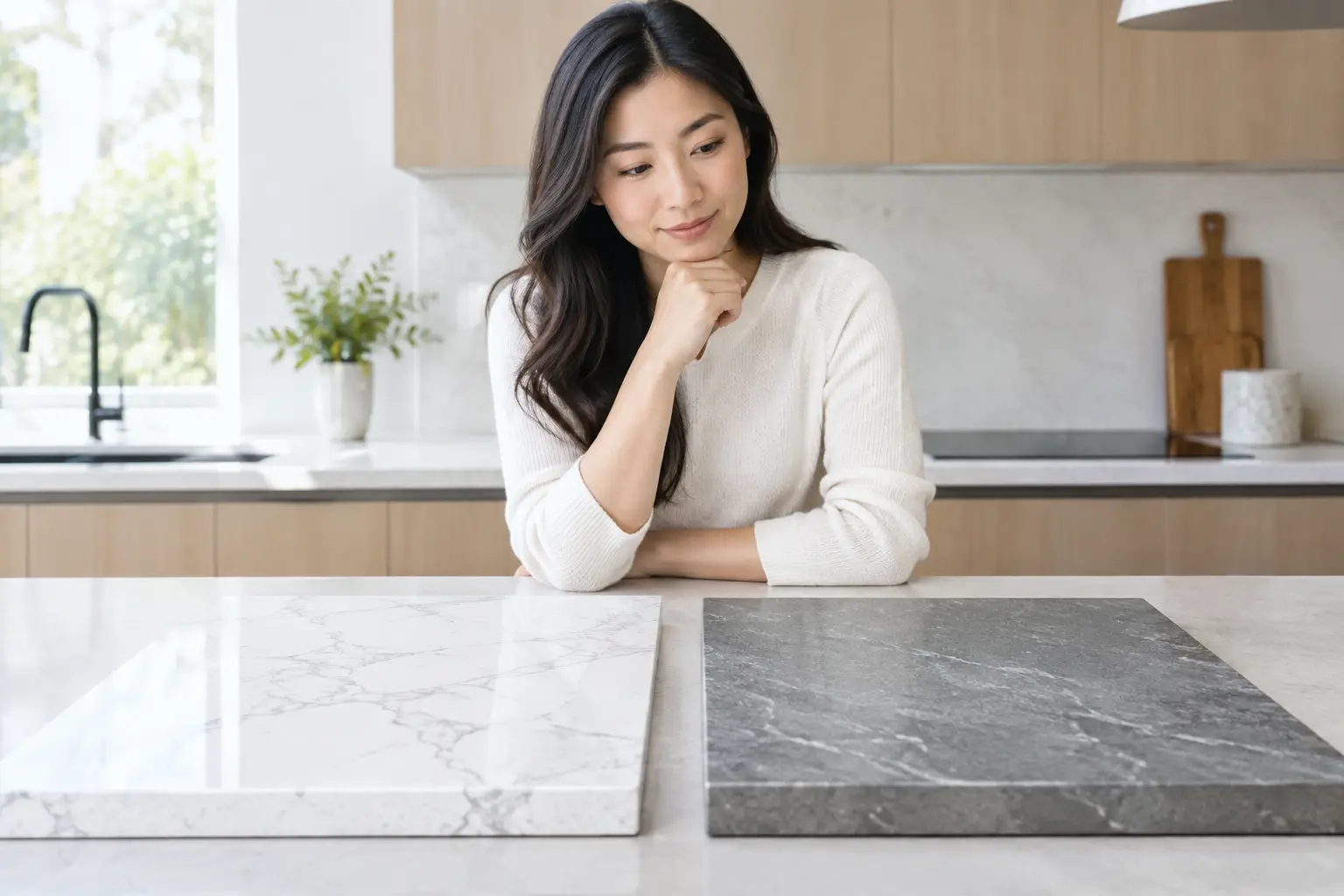
A countertop does more than finish a kitchen. It sets the visual temperature of the room, determines how confidently you can cook and host, and influences details from cabinet color to backsplash joints. In the decision between quartz versus sintered stone, neither material is automatically superior. The right choice depends on how the surface will be used, the look the design calls for, and the level of care you expect from it.
For a calm Japandi kitchen, a pale, low-movement slab may bring the joinery into focus. In a dramatic modern luxury setting, a deeply veined, book-matched island can become the room’s defining gesture. Material performance still matters, but it should support the overall design rather than compete with it.
What separates quartz and sintered stone?
Quartz is an engineered surface, usually made from natural quartz aggregates bound with resin and pigments. This composition gives manufacturers remarkable control over color, pattern, and consistency. It is commonly selected for kitchen counters, vanity tops, and built-in work surfaces because it is nonporous and straightforward to maintain.
Sintered stone is made by compressing mineral-based raw materials under intense pressure and heat. The process is designed to replicate the geological forces that create stone, but in a controlled manufacturing environment. Its exact ingredients differ by brand, though they may include minerals, clays, feldspars, and natural pigments.
The distinction is not merely technical. Quartz often delivers a softer, more uniform appearance and a slightly warmer visual presence. Sintered stone can offer convincing stone, concrete, metal, or ceramic-inspired finishes, often with a matte texture and a more architectural character. Both are manufactured slabs, but they behave differently when exposed to heat, sunlight, impact, and fabrication demands.
Quartz versus sintered stone: performance where it counts
A beautiful sample in a showroom tells only part of the story. The more useful question is how the slab will perform in the specific zone where it is installed.
Heat and sunlight
Sintered stone has the stronger heat profile. It generally tolerates hot cookware better than quartz, making it appealing for serious cooks and for counters beside ovens or outdoor kitchen areas. That does not make it wise to treat any finished surface as a trivet-free zone. Sudden thermal shock, the installation system, and the manufacturer’s guidelines still matter.
Quartz is heat resistant, not heatproof. Prolonged or direct contact with very hot pans can damage the resin component, potentially causing discoloration or cracking. A simple trivet protects the surface and preserves its finish.
For spaces with intense daylight, sintered stone is also often the more dependable choice. Quartz can fade or change color with sustained UV exposure, particularly in outdoor applications or sun-drenched areas. In a bright interior kitchen, thoughtful window treatments and material placement may be enough. For an exterior counter, sintered stone is typically the better fit.
Stains, scratches, and daily care
Both materials are nonporous, which means they do not need the routine sealing associated with many natural stones. Coffee, oil, wine, and common household spills can usually be cleaned with a soft cloth, water, and a mild cleaner.
Quartz is highly stain resistant and well suited to busy family kitchens. It has good scratch resistance, although knives should never be used directly on the counter. Its resin content can be more vulnerable to harsh chemicals, strong solvents, and abrasive cleaning tools.
Sintered stone is exceptionally resistant to staining, scratching, and many chemicals. Its performance makes it especially compelling for worktops that see frequent food preparation, as well as commercial surfaces where appearance must hold up to constant use. Yet hardness has a trade-off: while the surface resists scratches, a sharp impact at an exposed edge or corner can chip it.
Impact, edges, and repairability
This is where material selection needs a design-led eye. Quartz is not indestructible, but it is generally forgiving in everyday residential use. Its edges can be shaped in a wider range of profiles, allowing for softened contemporary details, thicker-looking apron fronts, and more decorative treatments where appropriate.
Sintered stone is dense and hard, but its slimmer profiles and edges require careful fabrication and installation. An experienced fabricator will account for cutouts, unsupported spans, edge protection, and the location of seams. A minimalist waterfall island in sintered stone can look exceptionally refined, but the cabinetry and substrate beneath it must be accurately prepared.
Neither material is effortlessly repaired after a major chip or crack. Quartz repairs may blend more easily depending on the color and pattern. With sintered stone, repairs can be less discreet, particularly on strong veining or textured finishes. Good detailing is the first line of defense.
Design character: choose the surface that supports the room
Quartz offers a broad range of controlled aesthetics. It can emulate marble with soft veining, create an understated solid surface, or introduce fine particulate movement. For compact kitchens, this consistency can make cabinetry, flooring, and wall finishes feel more composed. A quiet white or warm greige quartz can be an effective choice when the joinery, lighting, and storage details deserve visual priority.
Sintered stone is often selected when a project calls for a more tactile or architectural finish. Large-format slabs can create continuity across a countertop, full-height backsplash, and island cladding. A concrete-look finish can ground an industrial or modern minimalist home, while a dark stone pattern can add depth to a contemporary condo kitchen without relying on overly ornate cabinetry.
Pattern scale should be considered early. A bold vein may look elegant across a large island but busy on a narrow galley counter with multiple cutouts. Similarly, a heavily textured matte slab can be striking under directional lighting, though it may show fingerprints or require more attentive wiping than a polished surface. Request a full slab viewing whenever possible. A small sample cannot reveal the true movement, tonal variation, or directionality of the design.
Cost is more than the slab price
It is tempting to compare quartz and sintered stone by square-foot pricing alone. That rarely reflects the final investment. Thickness, edge treatment, cutouts, transportation, access to the home, sink configuration, backsplash height, and installation complexity all affect the total.
Quartz is often the more accessible option for standard countertop applications, especially when using a familiar color, a straightforward edge, and conventional fabrication. Premium quartz patterns can still command a significant price, particularly when they are designed to resemble dramatic natural marble.
Sintered stone may cost more because fabrication requires specialized tools, careful handling, and skilled installation. Large panels, waterfall edges, mitered details, and full-height wall applications can increase the budget further. The material may be worth that investment when heat resistance, UV stability, or a continuous slab-led design is central to the brief.
A tailored quotation should define the slab brand and finish, thickness, number of seams, edge details, sink cutout, backsplash scope, and warranty terms. It should also clarify who is responsible for site measurement and final templating. These details prevent a beautiful concept from becoming a compromised installation.
Which material fits your home?
Choose quartz when you want a refined, low-maintenance counter with broad color options, gentle edge possibilities, and reliable everyday performance. It is particularly effective for indoor kitchens, bathroom vanities, and family homes where visual consistency and easy care are priorities.
Choose sintered stone when heat, strong daylight, a matte architectural finish, or large-format continuity are high on the list. It suits homeowners who want a surface that can extend from countertop to backsplash or island cladding with a distinctly contemporary presence. It also makes sense for outdoor-adjacent areas and demanding commercial settings, provided the fabrication is handled with precision.
For many projects, the strongest answer is not to use one material everywhere. A sintered stone cooktop run may be paired with a warmer quartz breakfast counter. A durable sintered stone vanity top can sit beside timber cabinetry that softens the composition. Layering materials thoughtfully gives each one a role rather than forcing a single surface to solve every design need.
The most successful countertop is one you barely have to think about once the home is lived in. It should carry the pace of weekday mornings, the heat of a dinner party, and the quiet visual rhythm of the room – while still feeling considered every time you walk in.
Do you have any enquiry?
Send us an enquiry! Let’s change ideas about what you want for your space.
CONTACT US