

12 Wabi Sabi Living Room Ideas for Quiet Comfort
12 Wabi Sabi Living Room Ideas for Quiet Comfort
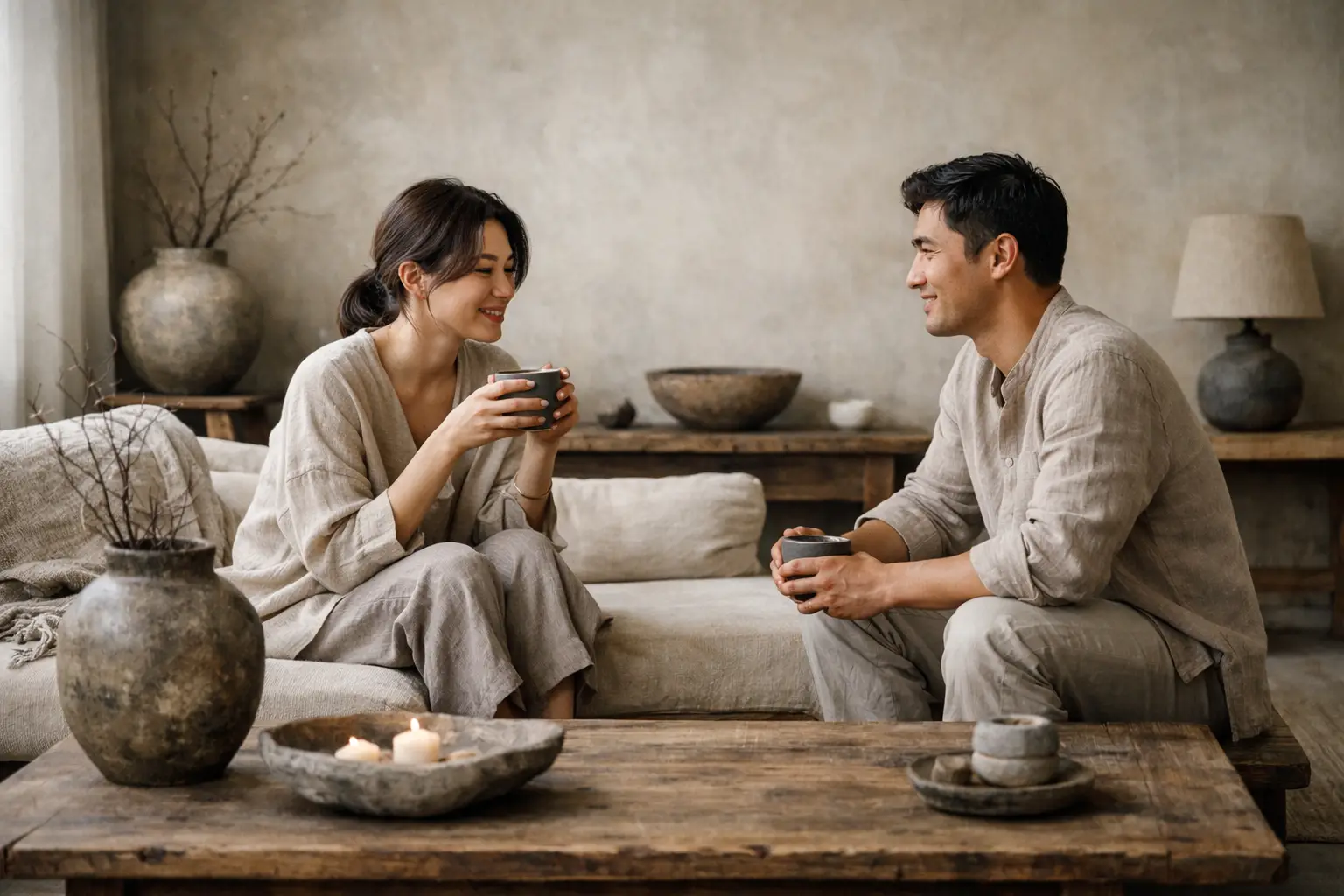
A room becomes memorable when it does not look as though it was installed all at once. The most compelling wabi sabi living room ideas leave space for grain, shadow, age, and the small signs of daily life. Rather than pursuing a perfectly coordinated finish, this approach creates a composed retreat where natural materials and personal objects are allowed to feel honest.
For homeowners shaping a new BTO, updating a resale apartment, or refining a condominium living area, wabi-sabi offers a useful counterpoint to overly polished minimalism. It is restrained, but never sterile. Its calm comes from thoughtful editing, tactile depth, and an appreciation for pieces that improve through use.
What Gives a Wabi-Sabi Living Room Its Character
Wabi-sabi is often reduced to beige walls and rustic ceramics. Those elements can play a part, but the philosophy is more nuanced. It values imperfection, impermanence, and simplicity, expressed through materials that retain their natural character. A softly uneven plaster finish, a weathered timber table, or a handmade vessel with an irregular rim can bring more presence than a room full of flawless new décor.
The goal is not to make a living room look unfinished. It is to make every decision feel intentional while avoiding visual rigidity. In a professionally designed space, that balance is achieved through proportion, circulation, lighting, and a tightly considered material palette.
12 Wabi Sabi Living Room Ideas to Consider
1. Start with an earthy, softened backdrop
Choose wall colors that sit close to nature: warm off-white, muted mushroom, clay, soft taupe, or a gray with brown undertones. These shades respond beautifully to changing daylight and provide a quieter setting for wood, linen, and stone. Stark white can work in a bright room, but it may feel too crisp unless warmer materials are layered generously around it.
For added depth, consider limewash, mineral paint, or a subtle plaster-like finish. The variation should be restrained. A heavily mottled wall can overpower a compact living room, while a gentle shift in tone gives the surface life.
2. Let wood show its grain
Wabi-sabi favors timber with visible knots, tonal variation, and a matte finish. Oak, ash, walnut, elm, and reclaimed wood are all suited to the style, depending on the level of warmth you want. A low oak console or solid timber coffee table can ground the room immediately.
Avoid matching every wood surface exactly. A slightly darker table beside lighter built-in cabinetry often feels more collected and relaxed. The connection should come through undertone and finish, not identical color.
3. Choose a sofa with a relaxed silhouette
The sofa is usually the largest visual mass in the room, so its shape sets the tone. Look for generous cushions, softened edges, low proportions, and textured upholstery in linen, cotton blend, bouclé, or brushed fabric. Oatmeal, putty, warm gray, and faded olive are particularly easy to layer.
A slipcovered sofa can feel wonderfully informal, though it is not ideal for every household. Homes with young children, pets, or frequent entertaining may benefit from performance fabrics that preserve the same tactile look while offering greater stain resistance.
4. Layer texture before adding color
A wabi-sabi scheme can be nearly monochromatic without appearing flat. The difference comes from material contrast: nubby upholstery against smooth ceramic, woven wool against timber, paper shades against plaster, and stone beside linen. These changes in surface catch light differently throughout the day.
Use a handwoven rug, a loose linen throw, and two or three cushions with varied weaves rather than assembling many decorative accents. The room should feel tactile, not crowded.
5. Make the coffee table quietly sculptural
A coffee table in travertine, timber, limestone, or textured concrete brings weight to a soft living room. Favor rounded corners, imperfect edges, and low, grounded forms. A table that is too delicate or overly glossy can interrupt the sense of ease.
Keep its styling spare. One ceramic bowl, a small stack of well-loved books, and a branch in a vessel are often enough. Empty surface area is part of the composition, especially in smaller homes where visual calm matters.
6. Use ceramics with visible handwork
Handmade ceramics are one of the clearest ways to introduce wabi-sabi character without a major renovation. Choose forms with subtle asymmetry, matte glaze, speckling, or an unglazed surface. A single large vessel on a console often has more impact than several small decorative objects.
The best pieces should look considered but not precious. They can hold dried branches, serve as a catchall, or remain empty as an object of quiet form.
7. Design lighting for shadow, not just brightness
An evenly bright room rarely feels restful after sunset. Build layers of warm light through a floor lamp, table lamp, wall light, or concealed joinery lighting, then use dimmers to adjust the mood. Paper, linen, frosted glass, and ceramic shades soften the source and create gentler shadow.
This is especially valuable in apartments where the living and dining areas share one ceiling light point. A tailored lighting plan gives each zone its own identity without relying on partitions.
8. Keep window treatments natural and generous
Full-height linen or linen-look drapery can make even a compact room feel more composed. Select an off-white or warm neutral fabric that filters daylight rather than blocking it completely. The slight movement and texture of the material add softness to hard architectural lines.
If privacy is a concern, pair sheer curtains with blackout drapery or discreet roller shades. Wabi-sabi is not about sacrificing function for atmosphere. It is about making practical elements feel integrated.
9. Bring in nature with restraint
A branch with an expressive shape, an olive tree, or a broad-leaf plant can introduce the irregularity that this style celebrates. Arrange greenery as you would sculpture: give it room around it, select a vessel with presence, and avoid filling every corner.
Fresh foliage changes over time, which is part of its appeal. Dried stems can work as well, provided they do not become a source of visual clutter or dust.
10. Use built-ins to hide the noise
A serene living room still needs to accommodate media equipment, cables, books, and everyday storage. Custom cabinetry in oak veneer, matte laminate, or painted finish helps contain these necessities. Flush doors and integrated cable management keep the architecture quiet, allowing the more tactile pieces to stand forward.
Open shelving can be beautiful, but it requires disciplined styling. If your collection is practical rather than curated, use mostly closed storage and reserve one niche for a few meaningful objects.
11. Display objects with a personal history
Wabi-sabi rooms gain depth from items that are genuinely connected to the people who live there: a travel find, an inherited bowl, a framed charcoal sketch, or books that are actually read. These details prevent the space from looking like a showroom.
Edit carefully. The distinction between soulful and cluttered is usually spacing. Group objects with room to breathe, and remove anything that does not contribute function, memory, or material interest.
12. Allow one imperfect focal point
Every room benefits from a moment that breaks the symmetry. It might be a rough-hewn bench, a vintage side chair, a large abstract painting with raw brushwork, or a stone pedestal that shows natural pitting. This focal point gives a tailored interior its human edge.
The key is contrast. In a room of quiet finishes, one expressive element has authority. Too many competing imperfect pieces can make the result feel themed rather than lived in.
Scale Matters in Compact Living Rooms
Many wabi-sabi references feature expansive rooms and large furniture, but the principles translate beautifully to smaller apartments. Focus on fewer, better pieces with clear purpose. A compact sofa with exposed legs may preserve more visual floor area, while a round coffee table improves movement around a tight seating arrangement.
Consider the lines of sight from the entry, dining area, and balcony. A low media console, full-height curtains, and a restrained palette can make a limited footprint feel more expansive. In Singapore homes, where daylight and storage planning often shape the entire renovation, a tailored layout is more valuable than simply purchasing more décor.
The Difference Between Wabi-Sabi and Rustic
Rustic interiors can be heavier, darker, and more decorative, with prominent reclaimed materials and traditional details. Wabi-sabi is typically quieter. It can sit comfortably within a contemporary apartment because its forms are clean, its palette is edited, and its beauty comes from texture rather than ornament.
It also differs from Japandi, although the styles overlap. Japandi often emphasizes crisp functionality and Scandinavian lightness; wabi-sabi introduces more irregularity, patina, and emotional warmth. A successful room can borrow from both, but it should not feel constrained by a label.
A living room does not need to be perfect to feel complete. Choose materials that invite touch, make room for the objects that carry meaning, and let the finished space evolve with the life happening inside it.
Do you have any enquiry?
Send us an enquiry! Let’s change ideas about what you want for your space.
CONTACT US