

Retail Shop Interior Design Guide
Retail Shop Interior Design Guide
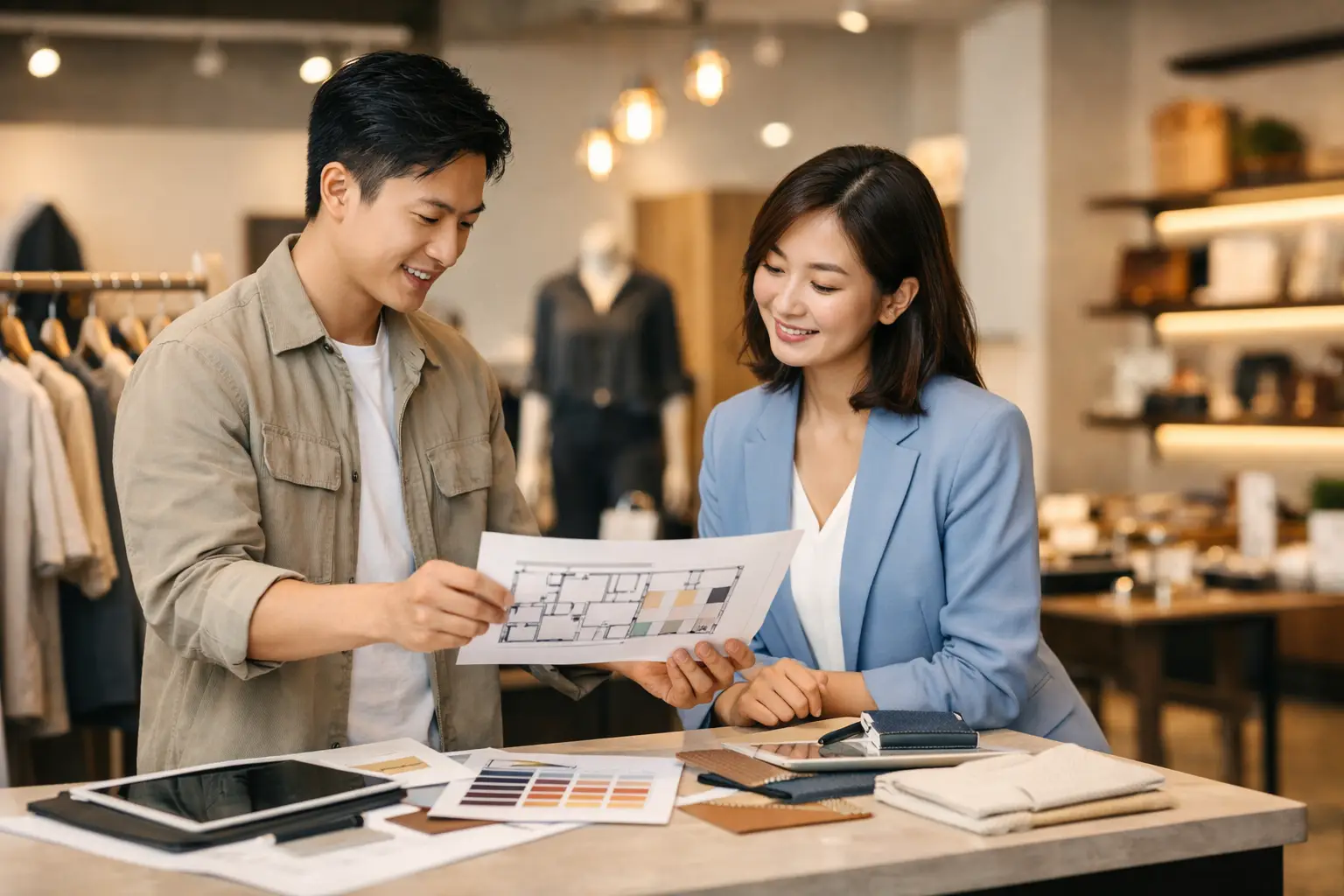
A customer pauses at your storefront for three seconds, looks through the glass, and decides whether to step inside. That decision is rarely based on product alone. It is shaped by layout, lighting, sightlines, material choices, and how clearly the space expresses your brand. A strong retail shop interior design guide starts there – with the understanding that design is not decoration. It is a business tool that influences traffic flow, browsing behavior, dwell time, and purchase confidence.
For retail owners, the challenge is rarely whether design matters. It is how to make the space feel memorable without compromising function. A boutique fashion store needs a different atmosphere than a beauty retail concept, a wellness shop, or a compact specialty store in a high-rent location. The best interiors are tailored to the product, the customer, and the pace of the business.
What a retail shop interior design guide should solve
A retail interior has to do several things at once. It must support operations, present merchandise clearly, and create an environment customers want to spend time in. If one of these areas is weak, the store can still look attractive but underperform in practice.
That is why good design begins with questions, not finishes. How do customers enter and move? Where do they naturally pause? Which products need immediate visibility, and which benefit from slower discovery? How often does stock rotate? Do staff need to offer one-on-one service, or is the experience more self-directed? These decisions shape everything from fixture placement to aisle widths.
Design also needs to reflect the level of brand positioning. Minimal, gallery-like interiors can elevate premium merchandise, but if the space becomes too sparse or intimidating, customers may hesitate to touch or explore. On the other hand, a high-density display strategy can increase product exposure, but too much visual noise often lowers perceived value. The right balance depends on your category, pricing, and audience expectations.
Start with brand expression, not just style
One of the most common mistakes in retail design is choosing a style before defining the brand experience. Modern minimalist, industrial, contemporary luxury, or Japandi can all be compelling directions, but they are only useful if they support the identity of the business.
A shop selling artisanal skincare may benefit from soft textures, warm neutrals, and calm lighting that suggest care and refinement. A streetwear concept may call for stronger contrast, bold materials, and a more energetic circulation pattern. Both can be visually polished, yet each communicates something very different.
Customers notice this alignment quickly. When the interior, packaging, staff presentation, and product story feel coherent, the brand earns trust faster. When they feel disconnected, the space can seem staged rather than considered.
For that reason, interior design should translate brand values into physical cues. Materiality, color temperature, joinery details, and signage all play a role. Even the fitting room, cashier counter, and product testing area contribute to the overall impression. The most effective retail spaces feel intentional from front threshold to final purchase point.
Planning the layout around customer behavior
If aesthetics shape first impressions, layout shapes what happens next. A well-planned store layout guides customers naturally without making movement feel forced. It helps them understand where to go, what to notice, and how to interact with the merchandise.
In smaller retail units, every square foot matters. You may need to prioritize fewer fixture types and cleaner pathways to avoid crowding. In larger stores, zoning becomes more important. Entry zones, hero display areas, browsing sections, service points, and checkout should relate to one another with clarity.
There is no single layout that works for every store. Grid layouts are efficient and familiar, especially when product volume is high. Free-flow layouts feel more curated and are often better for lifestyle-driven concepts. Hybrid layouts can work well when you want both structure and visual softness. The right choice depends on how customers shop your category.
A useful retail shop interior design guide should also account for pause points. Customers rarely absorb an entire store in one sweep. They look, stop, turn, compare, and return. Strategic focal points help control this rhythm. A statement display near the entrance can pull them in, while a feature wall deeper inside can encourage full-store exploration.
Lighting is where atmosphere and sales meet
Lighting is one of the most underestimated elements in retail design. It affects mood, product perception, color accuracy, and the overall sense of quality. Flat or overly bright lighting can make a shop feel generic, while poorly layered lighting can create shadows, glare, or visual fatigue.
The goal is not simply brightness. It is hierarchy. Ambient lighting establishes comfort, accent lighting highlights key merchandise, and task lighting supports staff functions such as wrapping, consultation, or cashier activity. When layered correctly, lighting helps customers understand what matters in the space.
This is especially important in categories where texture, finish, and color influence purchasing. Apparel, cosmetics, jewelry, and home goods all benefit from careful lighting calibration. Warm lighting may create intimacy, but in some settings it can distort product tones. Cooler lighting can feel crisp and premium, but too much of it may become clinical. The right specification depends on what you sell and how you want it to feel.
Materials and finishes should work as hard as they look
Retail interiors are high-contact environments. Flooring, counters, shelving, handles, and wall finishes need to withstand daily wear while still presenting the brand well. This is where thoughtful selection matters more than trend chasing.
A stone-look surface may project sophistication, but if it chips easily in a busy store, it becomes a maintenance issue. Matte finishes can feel refined, yet some show fingerprints more readily than expected. Timber adds warmth and texture, though the wrong stain tone can date the space or clash with merchandise.
The strongest schemes usually mix durability with restraint. A limited material palette often feels more elevated than too many competing finishes. It also gives products room to stand out. In retail, the interior should frame the merchandise, not compete with it.
Custom joinery is often worth considering because it allows display dimensions, storage, and brand detailing to be resolved together. This is especially valuable in compact spaces where off-the-shelf fixtures may waste usable area or create awkward proportions.
Design for operations, not just customer-facing moments
Beautiful stores often fail in the back-of-house details. Staff circulation, concealed storage, point-of-sale positioning, stock access, and restocking efficiency all affect the day-to-day success of the business. If these areas are overlooked, even a visually strong store can become difficult to operate.
For example, a clean front counter may look elegant, but if there is no practical space for bags, packaging, devices, or impulse items, the checkout experience suffers. Open shelving may appear airy, but if staff have nowhere to keep overstock, the floor becomes cluttered during busy hours.
This is where tailored design adds real value. A professional team will study not only how the space should look, but how it should function during opening, closing, peak traffic, maintenance, and seasonal changeovers. In commercial interiors, that practical layer is not secondary. It is part of the design.
Create moments, but keep them purposeful
Memorable retail spaces often include one or two standout gestures – a sculptural display table, a textured feature wall, a dramatic ceiling treatment, or a framed consultation corner. These moments help the store feel distinctive and can strengthen social sharing as well.
Still, statement features should have a purpose. If they block views, interrupt circulation, or overwhelm the product, they become expensive distractions. The most successful focal elements are integrated into the customer journey. They support storytelling, reinforce category highlights, or anchor the spatial identity of the store.
This is particularly relevant for brands that want a premium feel. Luxury is not about adding more finishes or details. It is about clarity, proportion, craftsmanship, and confidence in what the space chooses to emphasize.
A design process that reflects the business
No two retail projects should follow exactly the same formula. A first-time shop owner may need more guidance around spatial planning and budget allocation. An established brand expanding to a second location may already have strong visual identity standards but need help adapting them to a new footprint. Both require a considered approach.
That is why a consultation-led process matters. The best outcomes come from aligning business goals with site constraints, brand positioning, and customer expectations before design development begins. For retail clients looking for a more tailored approach, firms such as Space Atelier bring value through project-specific thinking rather than generic fit-out templates.
A well-designed store should feel effortless to the customer, but it is never accidental. It is the result of measured decisions about space, behavior, materials, and brand expression working together.
When your interior is planned with that level of intention, the store does more than look polished. It gives customers a reason to step in, stay longer, and remember how your brand made them feel.
Do you have any enquiry?
Send us an enquiry! Let’s change ideas about what you want for your space.
CONTACT US